Plan a 4-Day Los Angeles Itinerary with Ease
Travel, Los Angeles Itinerary, Road Trips
How to Plan a Realistic 4‑Day Los Angeles Itinerary With a Rental Car
First time in Los Angeles with a rental car? The secret to a smooth, low‑stress trip is not squeezing in “everything” every day, but organizing your time by area so you spend less of your vacation in traffic and more of it actually enjoying LA.
Why Planning LA by Area Matters So Much
Los Angeles is not a compact, walkable city where you can casually hop from neighborhood to neighborhood in minutes. It is a huge, spread‑out metropolitan area stitched together by freeways, canyons, and coastal roads. On a map, Hollywood, Santa Monica, Downtown LA, and Anaheim might look like short hops. In reality, they can be separated by dense traffic, lane changes, and unpredictable slowdowns.
Recent transportation data shows that Los Angeles has become the most congested city in the United States, with drivers facing more than eight hours of congestion per weekday and average commutes of about 30 minutes one way. That doesn’t mean you’ll be stuck for hours on every drive, but it does mean you should avoid building an itinerary that bounces across the entire region multiple times a day. Short distances on a map do not guarantee short driving times, especially during peak hours or when there are incidents on the freeways.
The smartest way to tackle LA is to group attractions by geography. Instead of trying to see Hollywood, Santa Monica, Downtown, and Anaheim all in one day, you cluster nearby neighborhoods together. This is where having a rental car becomes a real asset: you have flexibility, but you use it strategically rather than driving in circles.
📌 Key Takeaway: Design your 4‑day plan so each day is focused on one main part of the city. You’ll see more, feel less rushed, and avoid turning your vacation into a four‑day commute.
A Flexible 4‑Day LA Itinerary Framework (By Area, Not Checklist)
Think of the following 4‑day plan as a framework, not a rigid schedule. You can swap days around, add or remove stops, or stretch one area over more time if it matches your interests. The goal is to give you a realistic structure that respects LA’s geography and traffic patterns, while still leaving room for spontaneity.
Day 1: Hollywood, Griffith Observatory & West Hollywood
Start your trip around the classic LA icons. Hollywood, Griffith Park, and West Hollywood sit relatively close together in Central LA, which makes them ideal for a clustered first day. If you’re arriving in the morning, you can head straight from the airport to this area; if you land later, treat this as your first full day instead.
Hollywood Walk of Fame & TCL Chinese Theatre: A natural starting point for first‑timers. You can park once and explore the Hollywood Boulevard stretch on foot, checking out the stars on the sidewalk, the theatre, and nearby viewpoints of the Hollywood Sign from street level.
Griffith Observatory & Griffith Park: Later in the afternoon or toward sunset, drive up to Griffith Observatory for sweeping views of the city and the Hollywood Sign. Parking can be competitive, so consider arriving a bit earlier than sunset and being patient with traffic heading up the hill.
West Hollywood (WeHo): After Griffith, head down toward West Hollywood for dinner. The Sunset Strip and Santa Monica Boulevard offer plenty of restaurants, bars, and nightlife. Once you park for the evening, you can walk between many spots.
💡 Pro Tip: If you’re staying in Hollywood or West Hollywood, leave your car at the hotel in the evening and use rideshare if you plan to enjoy the nightlife. It’s often easier than hunting for late‑ night parking again.
Day 2: Beverly Hills, Museums & Central Los Angeles
Day 2 keeps you in central and west‑central LA, focusing on culture, architecture, and a bit of glamour. This day works well whether you’re based in Hollywood, West Hollywood, or Beverly Hills itself.
Beverly Hills & Rodeo Drive: Start with a relaxed morning stroll around Beverly Hills. You can park near Rodeo Drive, walk the shopping streets, and take in the manicured neighborhoods and palm‑ lined avenues. This is more about atmosphere than a checklist of attractions.
LA’s Museum Row or The Getty: In the afternoon, pick a major museum cluster rather than trying to do them all: Miracle Mile offers LACMA, the Academy Museum of Motion Pictures, and the La Brea Tar Pits within a relatively compact area. Alternatively, the Getty Center (north of West LA) offers art, architecture, and panoramic city views, but plan extra time for parking and the tram up the hill.
Evening in Central LA or back to WeHo: Depending on where you’re staying, you can either grab dinner around Miracle Mile, Beverly Grove, or head back to West Hollywood for another evening in a familiar area.
Again, notice the pattern: you’re moving within a relatively tight radius, not jumping from Beverly Hills to Anaheim and back in the same day. That’s how you keep the day enjoyable and flexible instead of dictated by the freeway.
Day 3: Santa Monica, Venice & the Coast
Your third day is all about the ocean. Rather than trying to “swing by” the beach between other neighborhoods, dedicate a full day to the Westside coast. This gives you time to enjoy the sand, the pier, the bike paths, and the unique atmosphere of LA’s beach communities.
Santa Monica: Park once near the pier or downtown Santa Monica and explore on foot. You can walk the Third Street Promenade, the pier, and the beachfront paths without needing to move your car every hour. If you prefer, you can rent bikes or scooters to cover more ground along the coast.
Venice Beach & Abbot Kinney: From Santa Monica, either drive a short distance or bike down the coastal path to Venice. The Venice Boardwalk, Muscle Beach, and the canals each have a very different feel. Abbot Kinney Boulevard offers boutiques, cafés, and restaurants in a walkable stretch a bit inland from the sand.
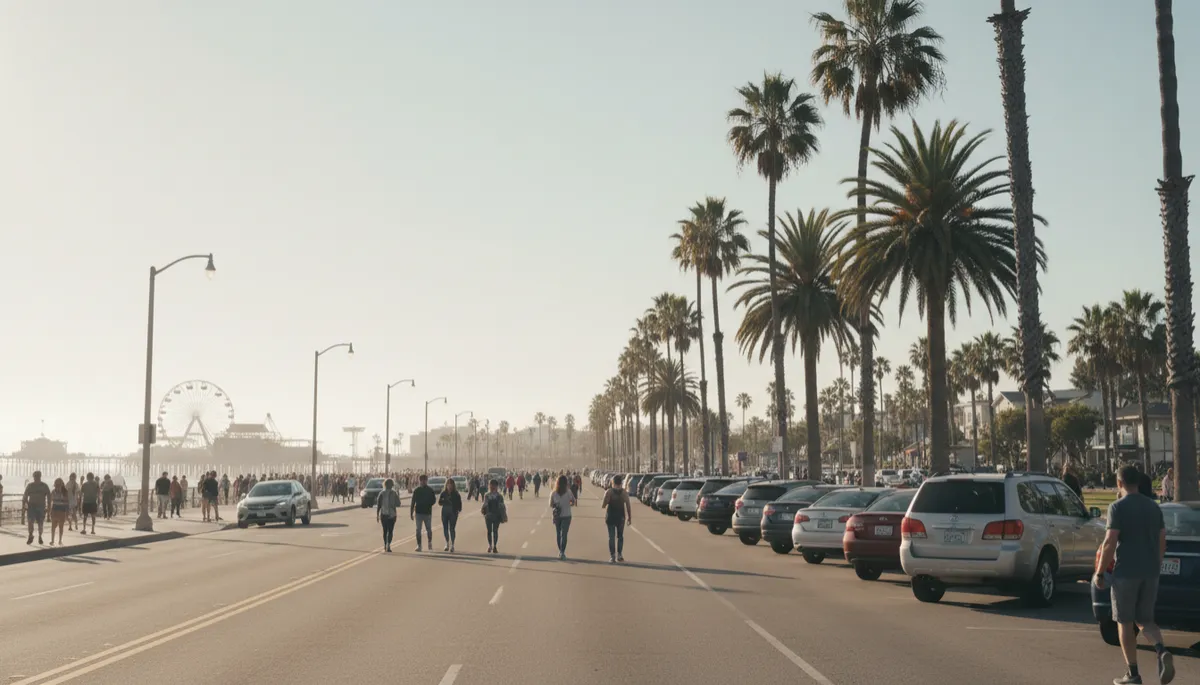
Dedicating a full day to the coast lets you park once and explore on foot.
If you’re staying on the Westside (Santa Monica, Venice, or nearby), this can be a day when you mostly leave the car parked and rely on walking, biking, or short rideshare trips. The area is more compact than many other parts of LA, and parking can be competitive, so minimizing car moves often makes the day smoother.
Day 4: Your “Wildcard” Day – Theme Parks, Malibu, or Downtown LA
The fourth day is your flexible “priority” day. Rather than trying to cram Universal Studios, Disneyland, Malibu, and Downtown LA into a single blur, choose one main focus and build the day around it. Here are some popular options:
Universal Studios Hollywood: Best treated as a full day. With rides, shows, and the backlot tour, you’ll want to arrive around opening time and stay into the evening if you have the energy. The park has its own parking structures, so driving makes sense here.
Disneyland & Anaheim: Disneyland Resort is in Anaheim, southeast of central LA. It’s very doable with a rental car, but it’s far enough that you should dedicate the entire day to it. Plan for early departure, paid parking at the resort, and a late return after fireworks if you stay until closing.
Malibu & the Pacific Coast Highway: If you prefer a slower, scenic day, drive north along the coast from Santa Monica toward Malibu. You can stop at beaches, viewpoints, and cafés along the way. Parking varies by beach and lot, so bring patience and read signage carefully.
Downtown LA & Arts District: If theme parks aren’t your thing, use this day to explore Downtown LA, the Arts District, and nearby cultural spots. You can visit historic theaters, Grand Central Market, museums, and galleries, then end the day with dinner and drinks downtown.
The key is to pick one anchor area and commit to it for the day. That way, you’re making one bigger drive rather than several smaller but frustrating ones across the region.
Understanding LA Traffic: Why “Close” Can Still Take a While
Even with a well‑grouped itinerary, Los Angeles traffic will influence your day. Studies in 2026 show that roadway travel has largely returned to pre‑pandemic levels, and LA now ranks as the most congested city in the US. Congestion can stretch across much of the weekday, not just during the classic morning and evening rush hours, and incidents on freeways can quickly ripple through the network.
Community data also illustrates how dramatically your reach shrinks in rush hour: starting from places like Santa Monica, the area you can cover in 30 minutes by car during peak times is a fraction of what you could reach late at night. That’s why it’s so important not to plan a tight schedule that assumes every 5–10 mile drive will be quick and easy.
💡 Planning Tip: Use real‑time navigation apps each morning, but build your itinerary so you don’t depend on everything going smoothly. Expect some delays and treat them as part of the LA experience rather than a crisis.
Hotel Location, Parking & Smart Car Use in LA
Choosing a Hotel Location That Matches Your Itinerary
With a rental car, you’re not locked into staying in one specific neighborhood, but your hotel location still shapes your daily drives. Consider:
Hollywood / West Hollywood: Great for first‑timers who want a central base near nightlife, with relatively straightforward access to Griffith Park, Beverly Hills, and even the Westside (traffic permitting).
Santa Monica / Westside: Ideal if the beach is a top priority and you don’t mind driving inland for Hollywood or Downtown on specific days.
Downtown LA: Convenient for cultural institutions, sporting events, and some transit connections, but you’ll be driving out to beaches and many tourist areas.
Pick the base that aligns with what you care about most. Because you have a car, you don’t need to be right next to every attraction—but a central or Westside location often works best for a first 4‑day trip.
Parking Basics & Why You Should Check Current Rates
Parking in LA is a patchwork of hotel garages, private lots, and city meters. City‑run meters and garages use demand‑based pricing in some areas, especially Downtown, Hollywood, Westwood, and Venice. Depending on the neighborhood and time of day, meter rates can range from low hourly costs to much higher prices in high‑demand blocks, and city garages often have flat evening or daily maximums. Airport parking (for example at LAX) has its own, separate pricing tiers that vary by lot type and distance from the terminals.
Because these numbers can change over time, always verify current parking costs and rules before you arrive—either via official city websites, garage operators, or your hotel. That way you can budget realistically and avoid surprises or tickets.
Is It Safe to Leave Luggage in the Car?
As in any major city, you should be cautious about leaving valuables in a parked car. Whenever possible, check into your hotel and drop off your luggage before sightseeing. If you have to stop somewhere with bags still in the vehicle—for example, driving from the airport to your hotel with a quick detour—aim for:
Well‑lit, busy parking structures rather than isolated side streets.
Keeping luggage out of sight in the trunk, not visible through windows.
Avoiding opening the trunk repeatedly in public lots, which can draw attention to your bags.
Use common‑sense precautions and, where possible, plan your first and last days so that you’re not sightseeing extensively with a fully loaded car.
Rush‑Hour Planning & When to Leave the Car Parked
While exact rush‑hour times can shift, weekday mornings and late afternoons/early evenings are consistently busier. Rather than fighting that reality, plan around it:
Do your longer drives outside peak times. For example, drive from Hollywood to Santa Monica mid‑morning, then stay on the Westside until after dinner instead of bouncing back and forth.
Park once, then walk. In compact areas like Hollywood Boulevard, Downtown LA’s core, or Santa Monica, it’s often more efficient to park in one central garage and explore on foot rather than moving your car every hour or two.
Use transit or rideshare selectively. If your hotel is near a Metro rail line or frequent bus corridor, it might be easier to take transit into Downtown during rush hour and leave your car at the hotel. Likewise, rideshare can be a good option for nights out when parking is tight or you don’t want to worry about driving.
📌 Strategy: Treat your rental car as your base camp, not a shuttle you use every 30 minutes. Drive between neighborhoods a few times a day, then slow down and experience each area on foot.
What Type of Rental Car Fits a 4‑Day LA Trip?
Once you’ve sketched out your itinerary, it’s time to think about the car itself. Because you’ll be spending time on freeways, navigating parking garages, and occasionally driving scenic routes like Mulholland Drive or the Pacific Coast Highway, your vehicle choice can shape how enjoyable those drives feel.
Local providers like 525i Guys focus on well‑maintained, comfortable cars that fit LA’s mix of city and scenic driving. Their fleet includes everything from convertibles to family‑ friendly vans and luxury sedans, which makes it easier to match a vehicle to your travel style rather than settling for a generic compact at the airport counter. Always check their site directly for the most current availability and details.
For Couples: The Convertible LA Dream
If this is a romantic getaway or a once‑in‑a‑lifetime “LA experience,” a convertible can turn even routine drives into part of the vacation. Cruising through Beverly Hills or along the coast with the top down feels very different from sitting behind a standard windshield the whole trip.
A BMW Z4 from 525i Guys offers a sporty, refined convertible experience that fits perfectly with scenic drives to Griffith, Malibu, or the Getty. It’s ideal for couples who pack light and value style and handling as much as practicality.
A Ford Mustang gives you that classic muscle‑car silhouette with open‑air cruising potential—great for travelers who want their rental to feel as memorable as the destinations themselves.
The trade‑off is trunk space and rear seating. If you’re a couple with minimal luggage, that’s not a problem. If you’re carrying large suitcases or shopping heavily, you’ll need to pack strategically.
For Families: Space, Seats & Sanity
Families visiting LA often juggle theme parks, beach days, and city sightseeing—all with kids, strollers, and luggage. In that scenario, passenger comfort and cargo space matter more than having a convertible roofline.
A Kia Carnival Hybrid from 525i Guys (if available when you book) offers three rows of seating and flexible interior configurations, making it easier to handle airport runs, Disneyland days, and beach gear. A roomy interior can make traffic more tolerable for everyone on board.
With a larger vehicle, keep in mind that some older parking garages and tight street spaces may feel snug. However, the trade‑off in comfort and storage is often worth it for families on a 4‑day itinerary packed with activities and gear.
For Comfort‑First Travelers: Luxury Sedans & Refined Rides
If you know you’ll be spending a fair amount of time in the car—driving to Anaheim, up the coast, or out to different neighborhoods—prioritizing a smooth, quiet ride can make a huge difference. Luxury sedans bring better sound insulation, more comfortable seats, and advanced driver‑assistance features that ease long freeway stretches.
A Mercedes‑Benz S‑Class from 525i Guys is an excellent choice if you want every drive—from LAX to your hotel, from Beverly Hills to Malibu—to feel like part of a premium experience. It’s particularly appealing for special occasions or travelers who simply value comfort above all else.
Luxury sedans also fit nicely into hotel valet operations and upscale neighborhoods where you may be pulling up frequently for dinners, shows, or meetings.
For Versatility: Crossovers & SUVs
Many LA visitors fall into the “we want comfort, but also practicality” category. Crossovers and SUVs hit that sweet spot: higher driving position, good cargo space, but still manageable in city parking structures and beachside lots.
A Subaru Crosstrek from 525i Guys suits couples or small groups who want something nimble yet capable of handling luggage and gear. It’s a comfortable choice for mixed itineraries that include city streets, hillside drives, and coastal routes.
A Mercedes‑Benz GLE offers more space and a more upscale cabin, ideal for travelers who want an SUV feel with luxury touches. It’s well‑suited to longer drives and full‑day excursions, where extra legroom and amenities really pay off.
Before booking, think through your luggage, passenger count, and typical day: will you be mostly in the city, or doing longer freeway runs? That will help you decide how much size and power you really need.
Why Consider a Local Provider Like 525i Guys
Large national brands are familiar, but local specialists can offer a more tailored experience. 525i Guys, for example, focuses on a curated fleet and convenient delivery options around Los Angeles. Instead of waiting in airport rental lines, you can arrange for a vehicle such as a BMW Z4, Ford Mustang, Subaru Crosstrek, Mercedes‑Benz GLE, Kia Carnival Hybrid, or Mercedes‑Benz S‑Class to meet you at or near your arrival point, subject to their current offerings and schedule.
Because fleet composition, mileage allowances, and pricing can change over time, always check the official 525i Guys fleet page for up‑to‑date details before you book. Use your 4‑day itinerary as a checklist: how many passengers, how much luggage, how many long drives, and how important is that “LA convertible moment” to you?
Putting It All Together: A Realistic, Enjoyable 4‑Day LA Plan
Planning Los Angeles with a rental car is less about squeezing in the maximum number of attractions and more about smart geography. By grouping your days—Hollywood and Griffith with West Hollywood; Beverly Hills with museums and Central LA; Santa Monica with Venice and the coast; and one flexible day for a big priority like Universal, Disneyland, Malibu, or Downtown—you build a structure that respects how spread out LA really is.
Layer in realistic expectations about traffic, flexible timing around rush‑hour windows, and a thoughtful approach to hotel location and parking, and suddenly the city feels far more manageable. You’re no longer reacting to congestion; you’re working with it, giving yourself room to enjoy each neighborhood instead of racing between them.
📌 Final Thought: Treat this itinerary as a starting framework. Adjust the neighborhoods, swap in your must‑see spots, and pick a rental car that matches your style and needs. With a bit of planning, your 4‑day LA trip can feel less like a logistics puzzle and more like what it should be: four days of sunshine, views, and memorable drives.