California Car Seat Laws: Family Guide for LA Trips
California Car Seat Laws, Child Passenger Safety, Family Car Rental Los Angeles
California Car-Seat and Booster-Seat Requirements for Families Visiting Los Angeles
Planning a family trip to Los Angeles often means renting a car to get from LAX to your hotel, beaches, and theme parks. If you are traveling with babies or children, understanding California car seat laws in a rental car is just as important as booking flights and accommodation. This guide explains the current rules, what they mean in everyday language, and how to plan your vehicle and car-seat needs before you arrive.
Why Child Passenger Safety Matters on a Los Angeles Trip
Greater Los Angeles is a driving city. Distances between LAX, Hollywood, Disneyland, beaches, and national parks are long, and traffic can be heavy. For visiting families, that usually means renting a vehicle. California’s child passenger safety laws apply no matter whose car you are driving—your own, a rental, a rideshare, or a friend’s vehicle. The driver is responsible for making sure every child is correctly restrained, and violations can mean fines of more than $500 once fees are added, according to the California Department of Public Health (CDPH).
Beyond avoiding tickets, correct car-seat use can dramatically reduce the risk of serious injury in a crash. Agencies such as the California Highway Patrol (CHP), the California Office of Traffic Safety (OTS), and CDPH all stress that using the right type of seat for your child’s age, height, and weight is one of the most effective ways to protect them on the road.
California’s Current Child Passenger Safety Requirements (2026)
As of late 2026, California’s child passenger safety rules are based on the California Vehicle Code and are enforced by CHP and other law enforcement agencies. The following summary is based on information from the California Highway Patrol and the California Office of Traffic Safety (OTS).
Rear-Facing Seats: Children Under Age 2
California law requires that most children under 2 years old ride in a rear-facing car seat in the back seat. According to OTS and CHP, there are two important exceptions: a child under 2 may ride forward-facing if they weigh at least 40 pounds or are at least 40 inches tall. However, safety experts usually recommend keeping children rear-facing for as long as they are within the height and weight limits of their specific seat, even if they meet those minimums earlier.
📌 Key Takeaway: If you are visiting Los Angeles with a baby or toddler under 2, plan on using a rear-facing seat in the back seat unless they clearly exceed 40 pounds or 40 inches and the seat’s manufacturer allows forward-facing.
Car Seats and Boosters: Children Under Age 8
For children who are older than toddlers but not yet preteens, California’s rules are straightforward. The law states that all children under 8 years old must be secured in an appropriate car seat or booster seat and must ride in the back seat, with limited exceptions (for example, if there is no back seat, or all rear seats are already occupied by younger children). This applies equally whether you are driving your own car or a rental vehicle picked up at LAX or elsewhere in California.
Within this age group, many children will first use a forward-facing harnessed car seat and later move to a booster seat. CHP recommends that children stay in a harnessed seat for as long as they meet the seat’s height and weight limits, because a harness generally offers more protection than a seat belt alone. Only once they outgrow the harness limits should they move to a booster that positions the vehicle’s seat belt correctly.
Seat Belts: Children 8 Years and Older or At Least 4′9″ Tall
Under current law in 2026, children who are at least 8 years old or at least 4 feet 9 inches (4′9″) tall may legally use the vehicle’s regular seat belt instead of a booster seat, as long as the belt fits them properly. CHP and OTS describe proper fit as:
The lap belt lies low across the hips or upper thighs, not the stomach.
The shoulder belt crosses the center of the chest and shoulder, not the neck or face.
If the belt does not fit correctly, the child should remain in a booster seat, even if they meet the age or height minimum. This is where legal minimums and best-practice safety recommendations may differ: the law allows a child to move out of a booster at 8 years or 4′9″, but many safety advocates recommend staying in a booster until the belt clearly fits well in every vehicle they ride in.
Upcoming Change: The 5-Step Seat Belt Fit Test (Effective 2027)
A significant update is coming that is especially important for families with older children. California has passed a law expanding requirements for children ages 8 to under 16. Beginning January 1, 2027, a child in that age range who uses only the vehicle’s seat belt must pass the official 5-Step Seat Belt Fit Test. If they do not pass, they will still need some type of child passenger restraint, such as a booster seat, under California Vehicle Code § 27360.5.
Although the 5-step test will not be legally required until 2027, CDPH and other safety organizations already recommend using it now as a guide. The test checks that the child:
Sits all the way back against the vehicle seat.
Bends their knees comfortably at the edge of the seat without slouching.
Has the shoulder belt crossing the middle of the chest and shoulder, not the neck.
Has the lap belt low on the hips, touching the tops of the thighs.
Can stay in this position comfortably for the entire trip.
💡 Pro Tip: If you are visiting in 2026 but plan to return in 2027 or later, keep this upcoming change in mind—especially if your child is between 8 and 15 years old and close to “graduating” from a booster.
Back Seat vs. Front Seat for Children
California law requires that children under 8 ride in the back seat in their car seat or booster, with only a few exceptions. CDPH and CHP also strongly recommend that children under 13 years old ride in the back seat whenever possible, even if they are using a seat belt. The back seat is generally safer for children because it keeps them farther from front airbags and the most common impact zones in a crash.
In some small vehicles or unusual situations—such as a two-seat sports car or a pickup truck with no rear seat—a child may legally ride in the front seat with an appropriate restraint. However, a rear-facing car seat must never be placed in front of an active passenger airbag, as emphasized by CDPH and CHP. If your trip to Los Angeles involves renting a car, it is generally easier and safer to choose a vehicle with a full back seat for children.
Legal Requirements vs. Best-Practice Safety Recommendations
California law sets minimum standards for child passenger safety. Meeting the law is required, but it does not always equal the best protection for your child. National and state safety organizations often recommend going beyond the legal minimums when possible. For example:
The law allows a child under 2 to ride forward-facing if they are at least 40 pounds or 40 inches, but many experts recommend keeping children rear-facing until they reach the maximum limits of their rear-facing seat, because it offers better support for the head, neck, and spine in a crash.
The law allows a child to stop using a booster at 8 or 4′9″, but safety campaigns and the upcoming 5-step test law encourage families to keep children in boosters until the seat belt truly fits well in every vehicle they use.
When planning a trip, it can help to think of California car seat laws in a rental car as your starting point, then layer on best-practice recommendations as your schedule, budget, and luggage space allow. For many families, especially on busy Los Angeles freeways, choosing the safer option—such as keeping an older child in a booster a bit longer—offers extra peace of mind.
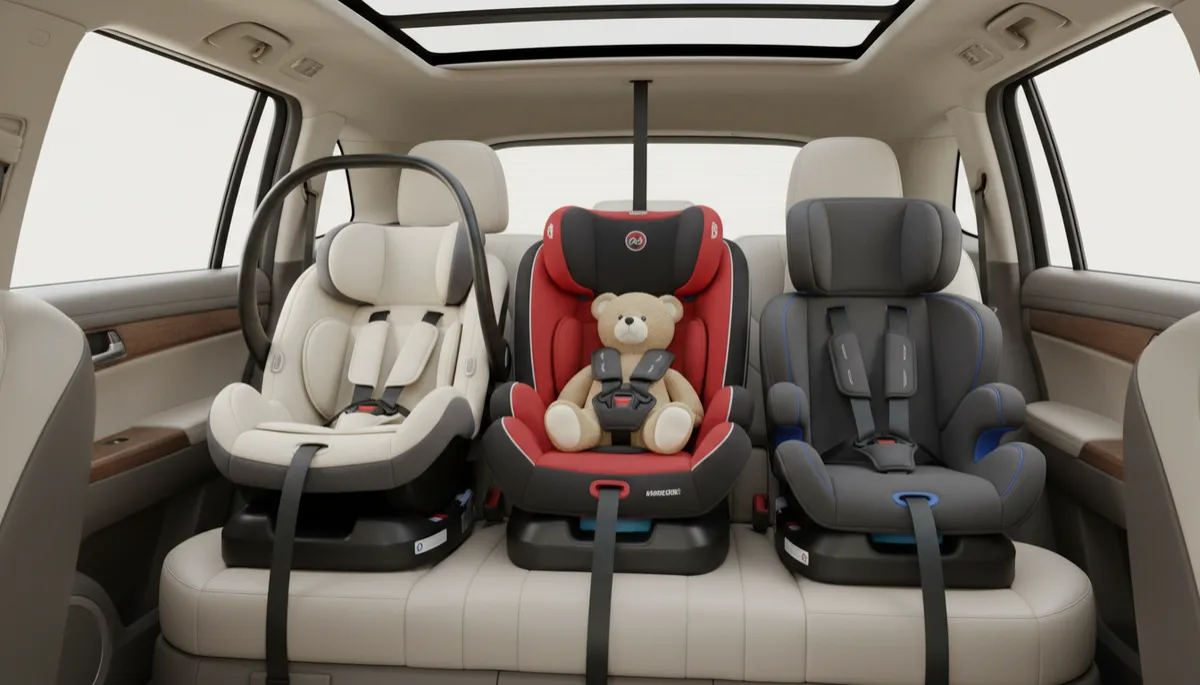
Planning seat types by age and size makes Los Angeles family driving safer and less stressful.
Should You Bring Your Own Car Seat or Rent One?
Once you know what type of restraint each child needs, the next question is how to provide it. For a family car rental in Los Angeles, you generally have three options: bringing your own child seat, arranging a car seat rental in Los Angeles, or buying a seat after you arrive. Each has advantages and disadvantages.
Option 1: Bringing a Personal Child Seat
Many families prefer to travel with their own car seats. Benefits include:
Your child is already familiar with the seat, which can reduce stress and fussiness after a long flight.
You know the seat’s history, expiration date, and that it has not been in a crash or misused by previous renters.
You can practice installing it before your trip, so you are confident that you can secure it correctly in a rental car.
The main downsides are the extra luggage and logistics. Car seats are bulky, and navigating LAX with multiple seats, strollers, and suitcases can be challenging. Airlines often allow car seats to be checked or gate-checked, but you should confirm policies in advance and consider using a protective bag to reduce damage risk.
Option 2: Renting or Arranging a Seat Locally
Some travelers look for car seat rental Los Angeles services through major rental companies or specialized baby-gear rental providers. Potential advantages include:
Less to carry through airports and onto planes, especially helpful for large families or solo parents traveling with children.
The seat is already at your destination city, so you can go straight from the rental counter to your vehicle.
However, renting child restraints also has limitations. Availability of specific seat types and sizes is not always guaranteed, and you may not know the seat’s full history or how recently it was cleaned or inspected. You also need to allow time at pickup to adjust harnesses and install the seat correctly before driving away from LAX or another location. Because policies and offerings vary, families should check directly with any company they are considering for booster seat California rental car solutions and confirm details in writing.
Option 3: Buying a Seat After Arrival
Some visitors choose to purchase a car seat or booster once they arrive in Southern California, especially for longer stays. This can make sense if you will be in the United States for several weeks or months, or if your child is close to outgrowing their current seat and you plan to upgrade anyway. Benefits may include:
Access to seats that clearly meet U.S. standards and labeling requirements, including those recognized by CHP and national safety programs.
The ability to choose a model that fits your rental vehicle and your child after testing it in person.
On the other hand, buying on arrival requires time to visit a store soon after landing, and you will need to plan what to do with the seat at the end of your trip (for example, taking it home or donating it if appropriate and allowed). You also must travel from the airport to the store safely, which may still require a temporary car seat solution. Because of this, many families prefer to have a plan in place—either bringing their own or arranging a California car seat laws rental car–compliant seat—before they leave home.
Special Considerations for International Families
International visitors often ask whether the car seats they use at home are acceptable in the United States. California’s child passenger safety laws focus on how children are restrained—rear-facing, forward-facing, booster, or seat belt—and do not list specific brands. However, car seats sold in other countries may be designed to meet different standards, labeling requirements, or installation systems than those commonly used in the U.S.
For example, some countries use different types of safety certifications or have child restraints that attach in ways not compatible with typical U.S. rental vehicles. While California law does not explicitly forbid foreign-certified seats, it is your responsibility as the driver to ensure that the seat can be installed correctly and used according to the manufacturer’s instructions. CHP and CDPH emphasize that a seat that cannot be properly installed or adjusted is not safe, even if it is technically legal in another country.
If you are traveling from abroad, consider researching whether your current seats are compatible with U.S.-style seat belts and LATCH anchors, and whether the manufacturer provides instructions for use in American vehicles. You may decide that bringing your own seats is still the best choice, or you may prefer to arrange renting car seats or buying U.S.-certified seats upon arrival so you can be confident they match local expectations. In every case, the California rules about age, size, and seating position still apply to your children once you are driving here.
Practical Planning Checklist Before You Rent a Vehicle in California
To make your Los Angeles trip smoother, it helps to review a simple checklist before you book flights or select a rental car. Use the list below to match your family’s needs with California’s child passenger safety requirements and your vehicle choice.
1. Child Age
List each child’s age at the time of travel. This will help you quickly see who falls under the under 2, under 8, and 8 and older categories that California uses in its laws. Remember that upcoming changes in 2027 will affect children up to age 16, so families with older kids may want to plan for boosters or additional restraints even if their children are already 8 or more.
2. Child Height and Weight
Height and weight are just as important as age. Measure or weigh your children shortly before the trip. You will need these numbers to:
Confirm whether a child under 2 must stay rear-facing or may legally ride forward-facing (40-pound and 40-inch thresholds).
Check if your child is within the manufacturer’s limits for their current seat or needs a larger car seat or booster.
3. Rear-Facing or Forward-Facing Requirements
Based on age, height, and weight, decide which children must be rear-facing under California law and which may ride forward-facing. Then review your car seat manuals to see if any children can safely remain rear-facing even longer than the minimum, following best-practice advice. This step is especially important for infants and toddlers, and for planning how many rear-facing seats need to fit in the back row of your rental vehicle.
4. Booster-Seat Needs
For children who have outgrown a harnessed car seat but are not yet ready for a seat belt alone, plan for booster seats. Consider:
How many boosters you need and whether they are high-back or backless (high-back boosters can be helpful in vehicles with low seat backs or no adjustable headrests).
Whether your older child might still need a booster to pass the 5-step test, even if they are 8 or older.
5. Number of Children and Seating Positions
Count the total number of children requiring car seats or boosters and compare that to the number of usable seating positions in the back rows of the vehicles you are considering. Not all seats are suitable for installing child restraints—for example, some middle seats in third rows may be narrow or have limited headroom. When browsing family car rental Los Angeles options, think through where each child will sit and whether there is enough room for all the required restraints side-by-side.
6. Vehicle Seating Capacity and Layout
Vehicle choice matters. A compact car might technically seat five people, but installing two bulky car seats in the back may make the center position unusable. Larger vehicles, SUVs, and crossovers often provide more space, extra LATCH anchors, and a third row, which is helpful for big families or groups traveling with grandparents and children together. When reviewing options, look at both total seat count and how many full-sized seating positions with head restraints and seat belts are available in the back.
7. Luggage and Stroller Space
Families visiting Los Angeles often bring or rent strollers, travel cots, and multiple suitcases. Once car seats and boosters are installed, you still need enough cargo space for everything else. Consider how many checked bags you will have, whether you are bringing a full-size stroller or a compact travel stroller, and how often you will be loading and unloading. A vehicle that looks large enough for passengers may feel cramped once all the luggage is added, especially for airport transfers and theme park days.
8. Installation Knowledge and Time
Finally, think about your comfort level with installing car seats and boosters in unfamiliar vehicles. Will you have time at the rental lot to carefully fit each seat, tighten the belts, and adjust harnesses before driving onto busy Los Angeles freeways? If not, consider practicing at home before your trip, watching manufacturer videos, or allowing extra time at pickup. CHP also offers child safety seat inspection events and can help families check their installations, though you will need to plan around office hours and locations.
📌 Key Takeaway: A few minutes of planning around seat types, vehicle layout, and luggage can prevent last-minute stress in the rental car garage and help you comply with California Car Seat Laws from the moment you leave LAX.
How Vehicle Choice Supports Safer Family Travel in Los Angeles
After you complete your checklist, it becomes easier to see what type of vehicle best fits your needs. For example, a family with three children—one rear-facing infant, one in a forward-facing harness, and one in a booster—may find that a mid-size sedan simply does not provide enough space across the back seat for three restraints. In that case, a larger SUV, crossover, or minivan can make daily driving and parking around Los Angeles much more manageable and safer.
When exploring options for a family car rental Los Angeles, look for vehicles with:
Multiple full-size seating positions in the second and, if available, third rows.
Sufficient trunk or cargo space for suitcases, strollers, and any extra gear.
Easy access to the third row (for example, sliding doors or walk-through seating) if you will be buckling multiple children daily.
Matching Your Needs to 525i Guys Vehicle Categories
Once you have a clear picture of your family’s seating and cargo needs, you can look for specific vehicles that align with them. At 525i Guys’ fleet page, you can browse a range of vehicles suitable for different family sizes and travel styles. While offerings may change over time, categories often include larger family vehicles, SUVs, and crossovers that provide the extra space many parents need when complying with Booster Seat Requirements and other California Car Seat Laws.
For example, models such as the Kia Carnival or Kia Carnival Hybrid (when available in the current fleet) are designed with families in mind. They typically offer three rows of seating, sliding doors for easier access, and generous cargo space, making it simpler to fit multiple car seats, boosters, and strollers without sacrificing comfort. Before you book, review the current seating capacity and configuration on the 525i Guys website to confirm how many passengers and child restraints each model can realistically accommodate.
Whether you choose a minivan-style vehicle like the Kia Carnival, a three-row SUV, or a roomy crossover, aligning your selection with your checklist will help ensure that you can install all required restraints correctly and still have space for luggage and everyday essentials. This is especially important for international family travel, where you may be relying on your rental vehicle as your base for exploring Los Angeles, theme parks, and coastal destinations.
Final Thoughts: Confident, Compliant, and Comfortable Family Driving in California
Visiting Los Angeles with children can be an unforgettable experience, from first views of the Hollywood sign to beach days and theme park adventures. Taking time before your trip to understand California car seat laws in a rental car, plan child restraints, and choose the right vehicle will help you start your holiday safely and calmly. Remember:
Children under 2 generally must ride rear-facing, and all children under 8 must be in a car seat or booster in the back seat, according to OTS and CHP.
Children 8 and older or at least 4′9″ can use a seat belt if it fits properly, but best-practice guidance and the upcoming 5-step test law encourage families to keep using boosters until the belt truly fits well.
It is strongly recommended that children under 13 ride in the back seat whenever possible, even if the law allows otherwise.
Decide early whether you will bring your own car seats, arrange a LAX car seat rental or local rental, or buy seats after arrival, and double-check that your choices align with California’s requirements. Then, match your family’s seating and luggage needs to a suitable vehicle from a provider such as 525i Guys, using their fleet page to compare larger family vehicles, SUVs, and crossovers that can comfortably accommodate your group.
By combining accurate information about Child Passenger Safety with thoughtful planning around Vehicle Choice For Families, you can enjoy your Los Angeles adventure knowing that your children are traveling as safely—and comfortably—as possible on every mile of the journey.