Parking Tips for Rental Cars in Los Angeles
Los Angeles Parking, Rental Car Tips, Travel Planning
Parking in Los Angeles with a Rental Car: A Practical Guide for Visitors
Parking in Los Angeles varies dramatically from one neighborhood to the next. For travelers renting a car, planning where and how to park should be part of the itinerary, not an afterthought at the end of a long day of sightseeing. This guide offers clear, practical advice on Los Angeles parking for tourists, from Santa Monica and Hollywood to Beverly Hills, Downtown, Venice, and beyond—along with rental car tips and a look at hotel parking costs you do not want to overlook.
Why Parking Belongs in Your Los Angeles Itinerary
Los Angeles is a city built around the car, but that does not mean parking is effortless. Each area—Santa Monica, Hollywood, Beverly Hills, Downtown Los Angeles (DTLA), Venice, and the surrounding neighborhoods—has its own rules, prices, and availability patterns. A spot that is simple and affordable at 10 a.m. on a weekday may be crowded and costly on a Saturday night or during a special event.
For anyone driving a rental car, this means parking decisions should be made before you put the vehicle in gear. Mapping out where to park in Los Angeles for each stop—beach, museum, restaurant, shopping district, or hotel—helps you:
Avoid last‑minute circling in heavy traffic
Control your daily parking budget in a city where rates can change quickly
Choose the right vehicle size and style for your itinerary and parking comfort
Main Parking Options Visitors Will Encounter
When driving a rental car in Los Angeles, you will typically choose among seven main parking options. Each has advantages depending on neighborhood, time of day, and your comfort level with urban driving.
Street parking – Curbside spaces along residential and commercial streets. Often the most affordable, but highly regulated. Time limits, permit requirements, and street‑cleaning rules are common, and violations can lead to tickets or towing. Always read every posted sign before leaving the vehicle and verify current rules through official City of Los Angeles or local city sources.
Metered parking (LA parking meters) – Paid curbside parking controlled by meters or mobile payment apps. In busy areas, metered parking in LA can be convenient for short visits but may have strict time limits and active enforcement. Rates and hours can change; confirm details via the meter display or official websites before paying and walking away.
Public garages and city lots – Municipal parking structures and surface lots operated by the city or a public agency. These are common in Santa Monica, Downtown Los Angeles, and near some beach areas. They often publish hours and baseline rates online, but event pricing or updates may apply, so check official sources close to your travel date.
Private parking lots and garages – Independently operated facilities near popular attractions, often with dynamic pricing based on demand. They can be convenient for Hollywood, Beverly Hills, and major venues, but prices vary widely. Look for clear signage on maximum daily rates and closing times before you pull the ticket and park your rental car.
Hotel parking – On‑site or valet parking offered by hotels and resorts. This is one of the most significant Los Angeles parking costs that travelers forget to check. Nightly fees can add substantially to your stay, particularly at luxury properties or in high‑demand areas such as Beverly Hills, Santa Monica, and Downtown. Always confirm availability, daily rates, and in‑and‑out privileges before booking a room.
Valet parking – Common at upscale hotels, restaurants, and shopping districts. Valet can be the most convenient option in tight or crowded areas, but it comes with service charges and customary gratuities. For a luxury rental or premium vehicle, valet parking can provide peace of mind if you choose reputable establishments and confirm hours of operation and overnight rules in advance.
Destination‑specific parking – Dedicated parking for beaches, attractions, or entertainment venues, such as Santa Monica beach lots, Hollywood & Highland type complexes, or museum garages. These locations often publish baseline information on hours and base rates, but event days, construction, and seasonal demand can alter availability; verify details through official attraction or city channels before you drive.
How to Read Los Angeles Street Parking Signs and Curb Colors
Understanding Los Angeles street parking signs is essential for any visitor using a rental car. The city follows both California Vehicle Code and Los Angeles Municipal Code rules, and enforcement is active. Before you lock your vehicle, read every sign that applies to the space, and check the curb color. When in doubt, consult current information from official Los Angeles Department of Transportation (LADOT) or local city websites, as rules and enforcement practices can evolve.
Key Elements to Check on Street Signs
Time limits – Many areas restrict how long you may park (for example, 1‑hour parking 8 a.m.–6 p.m.). Make sure your planned activity fits within the posted window, and remember that moving your car a short distance within the same zone may not reset the time in some areas, depending on local enforcement practices and signage.
Street‑cleaning restrictions – Weekly or bi‑weekly street cleaning is common, and fines can be significant. Look for signs listing specific days and hours when parking is prohibited. Plan your rental car movements around these windows to avoid tickets or towing, especially if you are leaving the car on the street overnight or for multiple days.
Permit or preferential parking zones – Many residential areas in Los Angeles and surrounding cities use preferential parking districts where only vehicles with resident permits (or specific placards) can park during restricted hours. Signs may read “Permit Parking Only” or specify certain times when permits are required. Visitors without permits should not park during those hours to avoid citations, and should always verify any exceptions with official sources, as some districts have overnight rules or special allowances for certain placards.
Posted hours of enforcement – Some restrictions apply only during business hours, while others are 24/7. Confirm whether the rule applies at night, on weekends, or on holidays, and note that holiday enforcement can differ from standard days. LADOT publishes holiday parking information, and travelers should consult those official resources for current details before assuming a rule is suspended.
Curb Colors and What They Mean
Curb colors in Los Angeles communicate additional parking regulations. The following descriptions reflect general city guidance; always confirm the latest details with LADOT or local city sources, as specific blocks may have posted variations.
Red curb – No stopping, standing, or parking, typically at all times unless posted otherwise. Do not leave your rental car in a red zone, even briefly, as violations can result in swift enforcement for safety reasons such as fire hydrants, intersections, or bus zones.
Yellow curb – Commercial loading zones, usually allowing commercial vehicles to load or unload for a limited time, with shorter allowances for passenger vehicles. These are commonly enforced during business hours. Unless signs clearly indicate otherwise, tourists should treat yellow curbs as short‑term loading only and avoid leaving a rental car unattended for longer than the posted limit.
White curb – Passenger loading only, often with a five‑minute limit and a requirement that the driver remain with the vehicle. These are typical near hotels, schools, and transit hubs. Use them for quick pick‑ups or drop‑offs, not for sightseeing stops or dining.
Green curb – Short‑term parking, such as 15 or 30 minutes, with specific hours posted on nearby signs. This can be convenient for quick coffee stops or brief errands, but be sure your visit fits within the time window to avoid citation once enforcement hours begin.
Blue curb – Accessible parking reserved for vehicles displaying valid disabled placards or license plates. Rules for these spaces are detailed in state and local regulations; visitors using accessible parking should review current California and LADOT guidance to ensure compliance, especially in preferential or overnight districts where additional permits may still be required.
In all cases, park with your passenger‑side wheels within the allowed distance from the curb, keep bumpers clear of driveways and crosswalks, and avoid blocking sidewalks. These basic positioning rules are enforced citywide and help keep both your rental vehicle and the streets around it safe.
Santa Monica Parking and the Beach: Planning for Sunsets and Crowds
Santa Monica parking is a central topic for visitors who plan to enjoy the pier, the beach, and the Third Street Promenade. The city operates numerous beach lots and downtown structures, and recent updates have extended some beach lot hours and adjusted downtown rates. However, event schedules, construction, and seasonal demand can significantly affect parking availability, so always verify details through the official City of Santa Monica website or mobile app before you drive.
Beach lots – These are the most convenient for direct beach access, especially if you are carrying chairs, umbrellas, or surfboards in your rental car. Some lots now stay open later during summer and daylight‑saving months, making it easier to enjoy sunset. Prices, though, can vary by season, time of day, and special events, so confirm current rates and closing times before you arrive.
Downtown structures – Parking structures near the Promenade and downtown shops are often a smart choice if you plan to dine, shop, and then stroll to the pier. The city has adjusted its rate structure to keep initial periods affordable, but these details may evolve. Rely on official Santa Monica sources or the city app for the latest pricing and validation information.
Event and construction impacts – During major events or infrastructure projects, certain lots or structures may partially close or operate at reduced capacity. In those cases, you may be directed to alternative garages such as the Civic Center structure, which can still be walkable to the beach. Checking ahead prevents surprises and helps you decide whether to bring a larger SUV or choose a smaller rental that is easier to maneuver and park in tighter spaces.
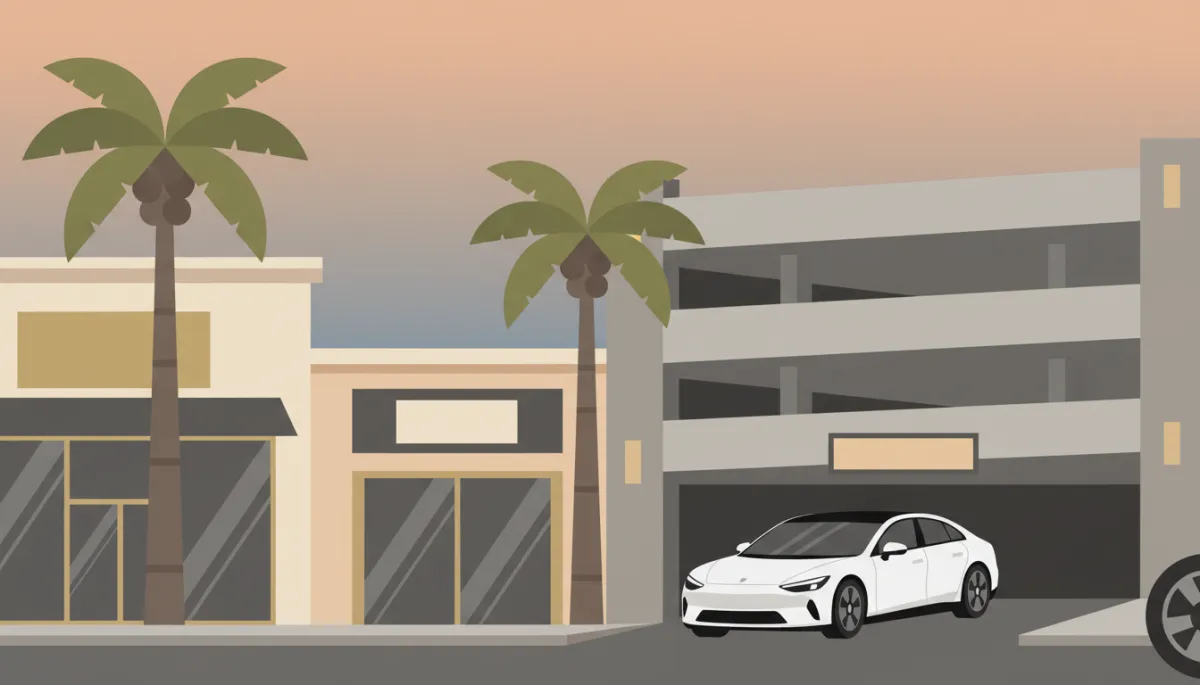
Choosing the right garage in each neighborhood keeps your Los Angeles days seamless.
Hollywood Parking: Garages, Lots, and Nightlife Crowds
Parking in Hollywood can be one of the more challenging experiences for visitors, particularly around Hollywood Boulevard, the Walk of Fame, and popular theaters. Los Angeles parking for tourists in this area is a mix of public garages, private lots, metered spaces, and valet services at hotels and restaurants. Prices vary widely and can increase during premieres, concerts, or festival weekends, so consider parking part of your entertainment budget and confirm current rates through trusted parking apps or official providers before you arrive.
Look for larger parking structures near well‑known intersections and attractions, as these often offer predictable access and clearly posted maximum daily rates. A compact or midsize rental is easier to maneuver through tight ramps and crowded floors, which can be an advantage in Hollywood’s multi‑level garages.
Metered parking LA options exist along some side streets, but time limits and evening enforcement vary. If you plan to enjoy dinner and a show, a garage or valet may provide more predictable coverage for the entire evening than a short‑term meter.
Beverly Hills Parking: Luxury Streets, Strict Rules
Beverly Hills parking reflects the city’s polished, high‑end environment. Around Rodeo Drive and the Golden Triangle, you will find a combination of metered street spaces, municipal garages, and private valet services at luxury hotels and boutiques. The city of Beverly Hills operates its own parking system, separate from Los Angeles, and posts rules and rates through official channels that visitors should review before arrival, especially as prices and time limits can change over time.
Many garages in the central shopping district are well‑maintained and clearly signed, which can be reassuring if you are driving a premium rental car. Confirm hours of operation and overnight rules; some garages close late at night, while others allow 24‑hour access with a ticket or room key validation from nearby hotels.
Street parking in Beverly Hills is carefully monitored. Always read both the meter and adjacent signs, and respect any residential permit restrictions. A brief walk from a municipal garage may be more relaxed than searching for curbside space immediately in front of your destination.
Downtown Los Angeles Parking: Business District and Night Out
Downtown Los Angeles (DTLA) offers extensive parking, from office‑tower garages and event lots to hotel structures and metered streets. Parking availability can shift quickly depending on conventions, games, concerts, and cultural events at nearby arenas and theaters. For visitors driving a rental car, the key is to decide in advance whether you are coming for business meetings, a museum afternoon, or a late‑night show, and then choose a parking option that safely covers the entire duration of your stay.
Office‑oriented garages may offer early‑bird or daytime rates but charge higher evening or event prices. Always read the posted boards at the entrance and verify whether the rate you see applies to your arrival time, departure time, and any event windows that may overlap with your visit.
Some hotels in DTLA offer valet parking with in‑and‑out privileges for overnight guests, which can be attractive if you are using your rental car to explore multiple neighborhoods during the day. Be sure to ask the hotel whether valet covers event nights, what the nightly fee is, and whether there are any height restrictions if you are renting a larger SUV.
Venice, Westside, and Other Popular Areas
Venice, with its canals, boardwalk, and Abbot Kinney Boulevard, offers a different parking experience. Street parking is heavily used and often subject to residential permits, while small lots and pay‑by‑space meters serve the beach and commercial corridors. On sunny weekends, parking availability near the sand can tighten quickly, so arriving early with a clear plan is essential.
For beach days, look for official city or county lots and verify pricing and hours through local government websites. Private lots closer to the boardwalk may charge premium rates during peak periods, especially in summer or on holiday weekends.
When exploring Abbot Kinney’s boutiques and dining, consider whether a smaller rental vehicle might make parallel parking less stressful on narrow streets. Metered parking LA options and short‑term spaces can work for a meal or shopping stroll, but always check time limits and nearby street‑cleaning signs if you plan to stay into the evening.
Other popular visitor areas—such as West Hollywood, the Arts District, or museum clusters along Wilshire Boulevard—combine residential restrictions, metered streets, and destination garages. In each case, the most reliable approach is to identify an official garage or lot near your primary stop, confirm hours and baseline pricing, and then decide whether to walk a few blocks or use valet for added convenience and security, especially when driving a luxury rental car.
Hotel Parking: The Cost Travelers Forget to Check
Hotel parking costs in Los Angeles can be substantial, particularly in high‑demand neighborhoods such as Santa Monica, Hollywood, Beverly Hills, and Downtown. Many visitors carefully compare nightly room rates, but overlook the daily parking charge until check‑in. For a multi‑night stay with a rental car, this can add significantly to your overall budget.
When booking, ask whether the property offers self‑parking, valet parking, or both, and whether rates differ for standard vehicles versus oversized SUVs. Some garages have height limits that may affect rooftop carriers or larger luxury SUVs, so clarify in advance if you are considering a premium or larger‑format rental.
Confirm whether your nightly rate includes in‑and‑out privileges. If you plan to drive to multiple neighborhoods each day, the ability to return to the hotel without additional charges can be valuable. If not included, factor potential re‑entry fees into your parking budget when deciding which hotel and which vehicle to book.
Some travelers choose a hotel with lower or even complimentary parking slightly outside the most crowded zones, then use their rental car to reach popular areas. Others prefer the convenience of on‑site valet in the heart of Beverly Hills or Santa Monica and accept higher nightly parking costs as part of a seamless, luxury‑oriented stay. Either way, it is a decision best made before you confirm the reservation, not after you arrive with your luggage and keys in hand.
Rental Car Tips: Parking Availability and Vehicle Choice
Parking availability and neighborhood layouts should influence how you choose your rental car in Los Angeles. Compact and midsize vehicles are generally easier to park in tight garages, narrow streets, and older lots with small spaces. SUVs and premium vehicles provide comfort and presence, but require more attention to height limits, stall widths, and valet policies. Convertibles are ideal for coastal drives and scenic boulevards, yet you will want secure, covered parking overnight and whenever you leave luggage in the trunk.
Planning your parking in advance also helps you decide how much you will actually drive. If most of your time will be in compact, walkable districts, a smaller vehicle may be more practical. If you are exploring wider regions—from Malibu to Orange County—a comfortable SUV or premium sedan can be worth the added parking considerations, especially when paired with reliable garages and hotel parking solutions.
Planning a Los Angeles Trip with 525i Guys and Smarter Parking
A well‑planned Los Angeles trip combines the right vehicle with a clear parking strategy. 525i Guys focuses on delivering a refined rental experience that aligns with how and where you intend to drive. By thinking through your parking needs first—Santa Monica beach days, Hollywood evenings, Beverly Hills shopping, Downtown meetings—you can select a vehicle that feels effortless to park as well as luxurious to drive.
If your itinerary centers on compact neighborhoods and busy garages, a smaller model from the 525i Guys fleet can make parallel parking and narrow ramps more comfortable. For family trips or group travel with luggage and shopping bags, an SUV from the same fleet offers space and presence while still fitting into standard garages when you choose your parking in advance. Travelers seeking the full Southern California experience may prefer a convertible, ideal for coastal drives to Santa Monica or Venice, while premium sedans and higher‑end vehicles suit Beverly Hills dinners, hotel valet stands, and executive meetings Downtown.
Reviewing your parking plans alongside the options at https://525iguys.com/fleet allows you to match vehicle size, style, and amenities with the neighborhoods you will visit most. This alignment turns parking from a daily stress point into a seamless extension of a luxurious, trustworthy rental experience.
Parking a Rental Vehicle Safely in Los Angeles
In any major city, basic safety practices matter, and Los Angeles is no exception. While many areas are well‑lit and actively patrolled, it is wise to treat your rental car with the same caution you would use in any large urban environment and to follow official safety guidance from local authorities and your rental provider.
Remove valuables and luggage from view whenever you leave the vehicle. Place items in the trunk before you reach your final parking spot, not while you are parked in a busy lot where others may be watching. Avoid leaving electronics, designer shopping bags, or visible suitcases inside the cabin, even for short stops.
Choose well‑lit, reputable garages or lots when parking at night, especially in unfamiliar areas. Hotel garages, major municipal structures, and established private lots with attendants or cameras often provide a more secure environment than isolated side streets. Review any safety recommendations provided by your hotel, attraction, or rental company for the neighborhoods you plan to visit.
Lock the vehicle, close all windows and the sunroof, and double‑check that you have your keys before walking away. If your rental includes keyless entry or remote start, follow the provider’s instructions to ensure the car is fully secured.
For premium or luxury rentals, valet parking at trusted hotels and restaurants can be a practical choice, as attendants typically store vehicles in monitored areas. Always retain your claim ticket, confirm the latest pickup time, and verify that the valet operation is officially associated with the property before handing over the keys.
Before You Park in LA: A Final Checklist
Use this concise checklist each time you prepare to park your rental car in Los Angeles. It brings together the essential points from this guide and helps you protect both your time and your travel budget.
Signs – Have you read every street sign and pole in the area where you are parking, including time limits, permit requirements, and any special event notices? If you are unsure, move to a clearly marked public garage or lot and confirm rules through official city or operator sources.
Meters – For metered parking LA spaces, have you confirmed the hours of operation, maximum stay, and accepted payment methods? Set a reminder on your phone so that you return before the meter expires, and verify that the license plate or space number is entered correctly if you pay via app or kiosk.
Street cleaning – Are there posted street‑cleaning times that overlap with your planned stay or overnight parking? If the cleaning window begins early the next morning, consider moving the car to a different side of the street or into a garage to avoid waking up to a ticket or tow notice.
Valuables – Have you removed or concealed all valuables, luggage, and shopping bags from the cabin, and placed necessary items in the trunk before arriving? A clean, empty‑looking interior is one of the simplest ways to reduce unwanted attention to your rental car.
Garage hours – If you are using a public or private garage, have you checked the posted closing time and any overnight rules? Confirm that your planned return time fits comfortably within operating hours, and note any event pricing that might apply if your stay overlaps with a game, concert, or festival.
Hotel parking – Before you book or extend a stay, have you reviewed hotel parking costs, self‑parking versus valet options, in‑and‑out privileges, and any height or size restrictions that could affect your chosen rental vehicle? If not, contact the property and clarify in writing so there are no surprises on your bill.
Destination parking – For each major stop—Santa Monica, Hollywood, Beverly Hills, Downtown Los Angeles, Venice—have you identified at least one reliable parking option in advance and verified current information through official city or attraction websites? If you are planning multiple stops in a single day, map out parking for each location and consider whether a smaller, more agile rental from a curated fleet such as 525i Guys would make the experience smoother.
With thoughtful planning, Los Angeles parking becomes another curated element of your trip rather than a daily uncertainty. By understanding neighborhood differences, checking official sources for current regulations and prices, and selecting a rental vehicle that suits both your driving style and your parking comfort, you can move through the city with confidence—arriving at each destination ready to enjoy everything Los Angeles has to offer.