Rental Car Breakdown Tips in Los Angeles
Rental Car Issues, Roadside Assistance, Los Angeles Travel
What to Do If Your Rental Car Breaks Down in Los Angeles or Southern California
A calm, step‑by‑step guide for travelers facing a rental car breakdown Los Angeles, from flat tires to dead batteries and other roadside surprises.
1. Safety First: Protect Yourself Before the Car
Whether you are cruising the Pacific Coast Highway, navigating the 405, or exploring Hollywood, the most important rule when you face any rental car breakdown Los Angeles or Southern California is simple: your safety comes first. Cars can be repaired or replaced; people cannot. Every decision you make should start with this mindset, especially around fast, dense freeway traffic common in the region.
If you notice a problem—such as a rental car flat tire California drivers dread, a strange noise, an overheating warning, or a rental car dead battery—do not slam on the brakes. Instead, signal, gradually ease off the accelerator, and move toward the nearest safe area. Ideally, this is a wide shoulder, an exit ramp, a parking lot, or a rest area. In city streets, look for a side street or parking lane away from active traffic lanes and intersections.
Once stopped, turn on your hazard lights to alert other drivers. If it is safe and legal to do so, set up reflective triangles or flares if the car is equipped with them. In heavy traffic or on high‑speed freeways, avoid standing near the flow of vehicles. If the car is in a dangerous location and you can safely exit on the side away from traffic, do so and move behind a barrier or far from the roadway while you arrange help. Never attempt roadside repairs in a live lane or in a narrow shoulder where passing vehicles are close to your body.
💡 Key Safety Reminder: If your rental car is disabled in a travel lane and you cannot move it, focus on getting yourself and your passengers to a safe place and then call 911 or the local emergency number. The vehicle can be handled later.
2. Common Rental Car Roadside Problems in Southern California
Los Angeles Travel often means long stretches of freeway driving, hot weather, and unfamiliar roads—conditions that can expose weaknesses in any vehicle. While major mechanical failures are relatively rare, travelers do regularly face smaller but stressful Rental Car Issues. Understanding the most common problems helps you react calmly and appropriately if something goes wrong with your vehicle in Southern California.
Flat Tire
A rental car flat tire California drivers experience is one of the most frequent roadside problems. You might feel vibration, hear a thumping sound, or see a tire‑pressure warning light. If this happens, reduce speed smoothly, avoid sharp steering, and get to a safe stopping point as soon as practical. Do not drive on a fully flat tire for long; it can damage the wheel and create more expensive repairs, but never prioritize the tire over finding a safe place to stop.
Dead Battery or Failure to Start
A rental car dead battery is another common headache, especially after leaving lights on or using accessories while parked. You might turn the key or press the start button and hear only clicking or nothing at all. In parking garages, hotel lots, or attractions around Los Angeles, this can be inconvenient but is usually manageable with proper roadside assistance support from the rental company or an authorized partner service.
Lost Keys or Locked‑In Keys
With busy itineraries and jet lag, it is easy to misplace keys or accidentally lock them in the trunk. Many travelers only discover the issue when they return from the beach or a theme park. Modern keys and fobs can be expensive to replace, and some rental providers treat lost or damaged keys as a separate charge—even when you have Roadside Assistance coverage—so you should always confirm the process with the rental company before taking action. In California, some major brands exclude key coverage from certain assistance packages, according to publicly available rental terms from companies like Alamo and Enterprise.
Mechanical Warning Lights and Strange Noises
Modern vehicles are full of sensors. You may see a “check engine” light, ABS warning, or other symbols you do not recognize. Not every light means immediate danger, but some can signal serious Mechanical Problems. If a red warning light appears, the engine temperature spikes, or the car feels unstable, safely pull over and contact the rental company before continuing. For amber or yellow warnings, it is still wise to call for guidance rather than ignore them, especially on unfamiliar roads far from your hotel or airport.
Overheating in Hot Weather or Heavy Traffic
Southern California’s heat and stop‑and‑go traffic can stress cooling systems. If you see the temperature gauge climbing into the red or an overheating warning light, turn off the air conditioning, turn on the heater to pull heat away from the engine, and move off the road as soon as it is safe. Do not open the hood immediately; steam or hot coolant can cause serious burns. Wait at a safe distance and call the rental car roadside assistance Los Angeles number listed in your paperwork for instructions on next steps.
Running Out of Fuel
With unfamiliar highways and long distances between some gas stations, especially if you head toward the desert or mountain areas, it is possible to misjudge fuel needs. If you run low, exit early rather than hoping the next station will appear. If you do run out and the car stops, treat it like any other breakdown: steer to a safe place if possible, turn on hazards, and call for help. Many rental companies and optional roadside packages offer fuel delivery up to a certain amount, but details and fees vary by provider and plan, as shown in their published policies for services like Budget Extended Roadside Assistance or Avis Extended Roadside Assistance.
EV Battery or Charging Problems
Electric vehicles are increasingly popular for Los Angeles Travel, but they introduce new challenges. Misjudging range, arriving at a broken charger, or not understanding how to start a fast‑charge session can leave you stranded. Some rental providers treat running out of battery differently from running out of gasoline—Budget, for example, notes in its public terms that EV battery depletion is not covered even with extended assistance and may require flatbed towing to the rental origin location. Always verify your specific rental agreement for EV‑related Roadside Assistance coverage, and plan charging stops ahead of time using reputable apps or navigation tools.
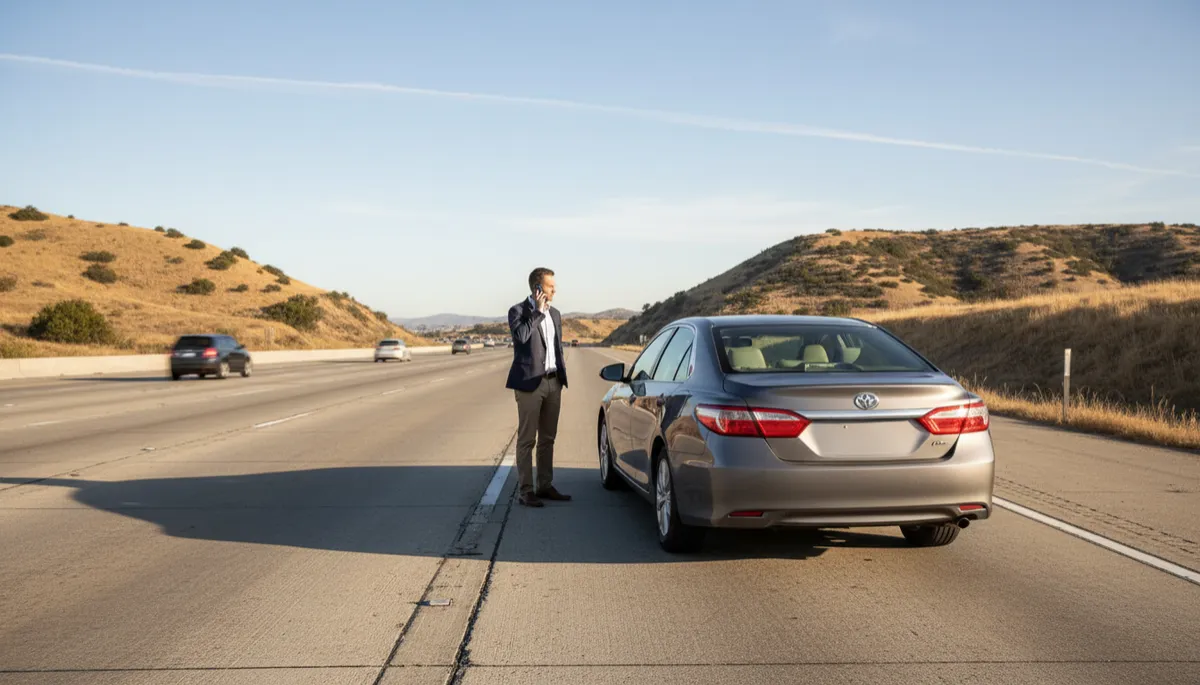
Stepping away from traffic and calling for help is safer than DIY roadside repairs.
3. Who Should You Call First?
Once everyone is safe and the vehicle is out of immediate danger, the next question is: who do you call first? In most situations involving a rental car breakdown Los Angeles or anywhere in Southern California, your first non‑emergency call should be to the rental company’s roadside‑assistance or support number, not an independent tow truck or repair shop, unless your rental agreement clearly instructs otherwise or you are directed by emergency services in a time‑critical situation.
The correct phone number is usually printed on:
the rental agreement or folder you received at the counter;
a sticker on the windshield or driver’s side window;
a tag attached to the key fob.
When you reach the rental car roadside assistance Los Angeles or national call center, be ready to provide:
your name and rental agreement or contract number;
the vehicle’s license plate and description (make, model, color);
your exact location (highway number, nearest exit, or landmark);
a clear description of the issue (flat tire, dead battery, warning light, lost key, etc.).
The agent will explain what to do next. They may dispatch a tow truck or mobile technician, authorize a tire change, or direct you to the nearest branch for a vehicle exchange. Following their instructions is critical: it helps control costs, protects your rights under the contract, and ensures that any towing or repairs are properly documented and authorized.
📌 Key Takeaway: Unless there is an immediate emergency or a clear safety threat, call the rental company’s support or roadside number before you contact independent roadside services. Your contract may require this for coverage.
4. How Rental Car Roadside Assistance Coverage Typically Works
Not all roadside help is the same. One of the most confusing parts of what to do if rental car breaks down is understanding what is actually covered. Based on publicly available information from major brands in 2026, most companies include some form of basic roadside support for mechanical defects with every rental, and then offer optional add‑on packages for broader coverage of everyday mishaps. Specific terms, limits, and fees can change, so always rely on your current rental agreement and official company resources for final details.
Included Basic Assistance vs. Optional Packages
Many major providers in Los Angeles and across California include basic roadside help when something goes wrong that is clearly the car’s fault—such as a mechanical breakdown or manufacturing defect. For example, public terms from companies like Hertz, Budget, and Enterprise generally indicate that mechanical failures are handled without additional roadside fees, though the exact process and any related charges can vary by location and contract. This basic help often does not cover issues like locking your keys inside the car, running out of fuel, or damage from misuse or off‑road driving.
To fill those gaps, rental brands commonly sell optional packages—such as Roadside Assistance Protection (RAP), Roadside Plus (RSP), Extended Roadside Assistance, or Premium Emergency Roadside Assistance. Publicly available descriptions suggest these add‑ons may include services like:
lockout help and key replacement or retrieval (sometimes with state‑specific exclusions);
flat tire assistance and towing, sometimes excluding the cost of a replacement tire itself;
jump starts for a rental car dead battery and basic electrical issues;
limited fuel delivery if you run out of gas, with the fuel cost or amount clearly defined.
However, limits, fees, and exclusions differ by brand and plan. Some packages cap coverage per incident or per rental; others exclude certain states from key coverage or handle EV range issues separately. For example, public Budget documentation notes that EV battery depletion is not covered even with extended assistance, while Fox Rent A Car publishes a per‑incident dollar cap for its RSA program. These details show why it is so important to read your own rental agreement and ask questions at the counter if you are unsure.
💡 Pro Tip: If you plan long drives to places like Joshua Tree, San Diego, or the Central Coast, consider whether an optional roadside package makes sense for your comfort level and itinerary. Always confirm current coverage directly with the rental provider before you rely on it.
5. What You Should Not Do Without Authorization
In a stressful roadside situation, it is tempting to “solve the problem” as quickly as possible by calling the first tow truck you find or authorizing repairs at the nearest shop. But with a rental vehicle, acting without approval can create additional costs and disputes. When facing Rental Car Issues, it is just as important to know what not to do as it is to know what to do.
Avoid Authorizing Major Repairs on Your Own
Unless your rental agreement clearly allows it, do not authorize major repairs—such as engine work, transmission service, or significant mechanical replacements—without explicit approval from the rental company. Most contracts require that mechanical repairs be coordinated through the company’s own locations or approved partners. If you authorize work independently, you may be responsible for the bill, and the company may still consider the vehicle altered or damaged in a way that affects your liability.
Do Not Replace Tires or Wheels Without Guidance
With a rental car flat tire California roads can easily cause, you might be tempted to buy a new tire at the nearest shop and keep driving. However, tire brand, size, and type can matter for safety and for the rental company’s maintenance standards. Many agreements require that you call their roadside line first. They may send assistance to install a spare, arrange a tow, or instruct you on approved tire replacement options. If you do purchase a tire yourself, keep all receipts and document the damage with photos, but understand that reimbursement is not guaranteed unless the company has authorized the solution in advance.
Do Not Arrange Towing Without Checking the Contract
Towing is another area where renters can accidentally create extra costs. Many rental companies specify which towing providers they use and where a disabled vehicle must be taken—often to the nearest branch or authorized repair facility. If you call an independent tow truck on your own, the rental company may not reimburse the charge, and they might even require a second tow to move the car to their preferred location. Whenever possible, wait for the rental company to arrange towing or to approve a specific provider, unless emergency responders instruct otherwise for immediate safety reasons.
Be Cautious About DIY Repairs
While changing a simple wiper blade or topping up washer fluid is usually harmless, more involved DIY repairs can create safety and liability issues. Avoid attempting your own brake work, electrical fixes, or engine tinkering on a rental vehicle. Even something as simple as jump‑starting another car with your rental can be risky if the contract prohibits it or if damage occurs. When in doubt, ask the rental company before you act, and always prioritize your personal safety over saving a few minutes of time.
⚠️ Warning: Independent decisions about repairs, towing, or modifications can affect your financial responsibility. Always consult the rental agreement and the company’s support line before committing to any major action.
6. What Should You Check Before Leaving the Rental Location?
The best way to handle a rental car breakdown Los Angeles is to reduce the chances—and stress—before you ever leave the lot. A quick, systematic check at pickup can save you time, money, and frustration later. Use this simple checklist before you drive away, especially if you are starting a road trip around Southern California.
Pre‑Departure Checklist
Roadside‑assistance contact number: Locate the dedicated number for Rental Car Issues. Save it in your phone and take a photo of any sticker or card with the details. This is crucial for Roadside Assistance in case of a flat tire, dead battery, or Mechanical Problems on the road.
Spare tire or tire‑repair setup (where applicable): Ask if the car has a full‑size spare, a compact “donut,” a tire‑inflation kit, or run‑flat tires. Knowing what is available helps you understand your options if you encounter a rental car flat tire California highways can cause from debris or potholes.
Fuel level or EV charge: Confirm the starting fuel level or battery charge and the return requirement. For EVs, ask about recommended charging networks and any special instructions. This reduces the risk of running out of gas or battery and needing emergency Flat Tire Help or towing just to reach a station or charger.
Warning lights: Turn on the car and check that no warning lights are already illuminated. If you see any, ask staff to document or resolve them before you depart. Leaving the lot with pre‑existing warnings can complicate what to do if rental car breaks down later in your trip.
Visible tire condition: Walk around the car and look for low tread, bulges, or obvious damage on all four tires. If something looks wrong, request another vehicle or have staff note it in writing. Healthy tires reduce the risk of Rental Car Issues like blowouts on busy Los Angeles freeways.
Rental agreement: Keep a digital or paper copy accessible. Skim the sections on Roadside Assistance, towing, and Mechanical Problems so you know the basics of your responsibilities and the company’s procedures in case of Emergency Car Tips situations like accidents or breakdowns.
Emergency contact information: Note local emergency numbers (911 in the U.S.), your travel insurance hotline if applicable, and any additional contacts you might need. Share your itinerary and vehicle details with a trusted friend or family member if you will be driving in remote areas.
Spending five extra minutes on this checklist at pickup is one of the simplest but most effective Emergency Car Tips for stress‑free driving in Los Angeles and Southern California.
7. Practical Guidance for Freeway Breakdowns in Los Angeles
Freeway breakdowns are particularly intimidating in Los Angeles, where multi‑lane highways and fast‑moving traffic are the norm. Yet many of the same principles apply: stay calm, prioritize safety, and avoid risky roadside repairs. Here’s how to adapt the general Emergency Car Tips to the unique conditions of Southern California freeways.
If the Car Is Still Moving
If you suspect a problem—a sudden vibration, loss of power, or warning light—but the car can still move, signal and gradually work your way to the right‑most lane. Avoid sudden lane changes or braking that could surprise other drivers. Look for:
the next exit ramp, where you can safely stop in a parking lot or side street; or
a wide shoulder or designated turnout area with enough space to park fully out of the travel lane.
Once stopped, turn on hazards, set the parking brake, and stay inside the vehicle with your seat belt fastened if the shoulder is narrow or traffic is close. Being inside the car is often safer than standing outside next to high‑speed vehicles, unless you can move far behind a barrier or fence. Then call the rental car roadside assistance Los Angeles number and provide your freeway name, direction, and nearest mile marker or exit.
If the Car Stops in a Travel Lane
In some cases—such as a sudden mechanical failure or a rental car dead battery while driving—the vehicle may lose power and come to a stop before you can reach the shoulder. If this happens:
Keep your seat belt on, activate hazard lights, and, if possible, call 911 immediately to report your location and situation. Emergency responders can help secure the scene and arrange towing if necessary.
If you are in immediate danger of being hit and can safely exit the vehicle on the side away from traffic, do so and move to a protected area, such as behind a barrier. Do not cross live lanes on foot.
Once emergency services are aware and you are in as safe a position as possible, contact the rental company to report the incident and receive instructions about the vehicle. In this kind of high‑risk situation, personal safety and coordination with law enforcement take precedence over standard contract procedures.
Do Not Attempt Dangerous Roadside Repairs
Changing a tire on the shoulder of a quiet rural road may be reasonable if you are experienced and the conditions are safe. On a crowded Los Angeles freeway with cars passing at 65 mph or more, it is usually not worth the risk. For most travelers, the safest option is to:
stay in the vehicle with seat belts fastened if the shoulder is narrow and you cannot move to a safer area; or
move behind a barrier or far from the roadway if you can exit safely on the non‑traffic side.
Leave tasks like jacking up the car, changing wheels, or working under the hood near fast traffic to trained professionals. Roadside Assistance and emergency responders have equipment, visibility gear, and training specifically for these conditions.
8. Why It Pays to Understand Your Rental Company’s Procedures in Advance
All of these Emergency Car Tips become much easier to follow when you already know the rules of the road for your specific rental provider. That includes where to call, what is typically covered, and how vehicle exchanges or tows are usually handled. Taking a few minutes before your trip to understand these details can turn a stressful rental car flat tire California incident into a manageable delay instead of a vacation‑ruining crisis.
If you are renting from a company such as 525i Guys, for example, it is wise to review their official materials and ask questions at pickup so you understand the expectations around Roadside Assistance, Mechanical Problems, and Rental Car Issues before they happen. You can explore their fleet options and vehicle details at https://525iguys.com/fleet, then follow up directly with them for the most current information about any roadside‑assistance or emergency procedures that apply to your specific rental and contract. This ensures you are relying on verified, up‑to‑date policies rather than assumptions or general industry examples.
Because rental terms can evolve over time and may vary by vehicle type, location, and package, you should always confirm details such as towing arrangements, tire and wheel policies, lost‑key handling, EV battery support, fees, and any limitations on third‑party services directly with 525i Guys or whichever provider you choose. Do not rely on generic advice or another traveler’s past experience when your own agreement—and the company’s current written policies—are the final authority.
📌 Before You Hit the Road with 525i Guys: Review your rental contract, note the emergency and roadside numbers, and ask a staff member to walk you through what to do if your rental car breaks down during your Los Angeles Travel. A two‑minute conversation can save hours of confusion later.
9. Putting It All Together: A Calm, Step‑By‑Step Response Plan
To wrap up, here is a simple, practical sequence you can follow whenever you face Rental Car Issues in Los Angeles or Southern California—whether it is a rental car dead battery in a hotel garage, a rental car flat tire California highways caused, or a sudden mechanical warning light in city traffic:
Stay calm and think safety first. Gently slow down, signal, and move to the safest possible location away from active traffic. Turn on hazard lights and set the parking brake.
Protect people before property. Decide whether it is safer to remain belted in the car or to exit on the non‑traffic side and move behind a barrier. Never stand close to moving traffic to inspect damage or attempt repairs.
Call emergency services if necessary. If your car is stuck in a travel lane, you have been in a collision, or you feel in immediate danger, call 911 first. Safety and traffic control come before rental procedures.
Contact the rental company’s roadside or support number. Use the phone number on your agreement, key tag, or windshield sticker. Clearly explain your location and the issue, and follow their instructions regarding towing, repairs, or vehicle exchange.
Avoid unauthorized major repairs or towing. Do not independently authorize expensive work, tire replacements, or towing unless the rental company or emergency responders direct you to do so. When in doubt, ask for written or recorded confirmation of any authorization.
Document the situation. When it is safe, take photos of any visible damage, the vehicle’s position, and nearby landmarks. Keep receipts for any expenses you incur, and record names, times, and instructions from company representatives for later reference.
Follow up with the rental office. Once the immediate issue is resolved, confirm any next steps with the rental branch—such as exchanging the vehicle, adjusting your contract, or handling any charges—so there are no surprises at return time.
With this plan in mind, plus a quick pre‑departure check and a clear understanding of your rental provider’s roadside procedures, you can explore Los Angeles and Southern California with confidence. A rental car breakdown Los Angeles drivers occasionally face does not have to derail your trip. By putting safety first, calling the right people, and respecting your rental agreement, you can turn an unexpected stop into a minor detour—and get back to enjoying the beaches, mountains, and neighborhoods you came to see.