Scenic Drives in LA: Iconic Routes & Rental Cars
Travel, Scenic Drives, Los Angeles, Road Trips, Car Rentals
Scenic Drives in Los Angeles: The Ultimate Guide to Iconic Routes and Ideal Rental Cars
Los Angeles is one of the world’s great driving cities, where oceanfront highways, canyon roads, and skyline views turn even a short trip into a memorable experience. Whether you are cruising the Pacific Coast Highway with the top down, winding through the Hollywood Hills, or escaping to the mountains above the city, the right route—and the right vehicle—can transform your journey. This guide explores the best scenic drives in and around Los Angeles, the ideal types of vehicles for each, and practical travel tips on parking, fuel efficiency, weather, traffic, photography, and planning. Throughout, we will highlight how premium rental providers like 525i Guys make it easy to match your dream drive with the perfect car.
Why Los Angeles Is Made for Scenic Drives
Few cities offer the variety of landscapes that Los Angeles does within a relatively short driving radius. In a single day, you can watch surfers along Malibu’s beaches, climb into pine-covered mountains on Angeles Crest Highway, and finish with a sunset cityscape from Mulholland Drive. Because LA is so spread out, visitors often spend a lot of time in the car; choosing routes that maximize scenery—and selecting a vehicle that fits the terrain—turns necessary transportation into a highlight of the trip rather than a chore.
Scenic drives also offer flexibility that traditional tours cannot. You can pull over at a viewpoint for photos, take an unplanned detour down a side road, or linger at a café that catches your eye. A well-planned itinerary, paired with a comfortable and stylish rental vehicle, allows you to experience Los Angeles on your own terms while still staying efficient with time, fuel, and parking.
Pacific Coast Highway: Classic Coastal Cruising from Santa Monica to Malibu and Beyond
The Pacific Coast Highway (PCH), also known as California State Route 1, is the quintessential Los Angeles scenic drive. Starting in Santa Monica, you can follow the coastline north through Pacific Palisades and Malibu, eventually continuing toward Oxnard, Ventura, and beyond. Ocean views, dramatic cliffs, and charming beach towns make this route ideal for relaxed exploration and photography.
Best Vehicle for the Pacific Coast Highway
For PCH, a convertible rental is hard to beat. With the top down, you can fully enjoy the sea breeze, the sound of the waves, and unobstructed views of the coastline. A midsize or luxury convertible balances comfort and fuel efficiency, especially if you plan to cover longer distances down to Laguna Beach or up the coast toward Santa Barbara. Couples and small groups will appreciate the open-air feeling and easy maneuverability for frequent stops at viewpoints and beach access points.
Parking, Traffic, and Timing on PCH
Parking along PCH varies from paid lots at popular beaches to limited roadside pullouts. In Santa Monica and Malibu, arrive early—especially on weekends and in summer—to secure a spot near the sand. Many state beaches offer daily parking for a flat fee, which can be more convenient than feeding street meters if you plan to spend several hours in one location. A smaller convertible or compact luxury sedan makes parallel parking and tight lots far easier than a large SUV or truck.
Traffic can be heavy near Santa Monica Pier and through central Malibu, particularly on sunny weekends and during late afternoon. To minimize delays, consider starting your drive shortly after sunrise or waiting until late morning after commuter traffic has eased. Sunset is magical on PCH, but it is also peak time for congestion; if you plan a sunset drive, allow extra time and be patient with slower speeds. For fuel efficiency, maintain a steady, moderate pace and avoid unnecessary acceleration when traffic is stop-and-go.
Top Photography Stops: Santa Monica, Malibu, and Beyond
For photography, consider stopping at the Santa Monica Pier for classic boardwalk shots, Will Rogers State Beach for wide ocean vistas, and El Matador State Beach in Malibu for dramatic sea stacks and caves. Many of these locations require short walks from the parking area, so wear comfortable shoes and keep valuables out of sight in your vehicle. Early morning and late afternoon provide the best light, and a convertible allows you to quickly pull over when you spot a particularly striking stretch of coastline.
Mulholland Drive: Skyline Views and Hollywood Hills Glamour
Mulholland Drive winds along the ridgeline of the Hollywood Hills, offering sweeping views of downtown Los Angeles on one side and the San Fernando Valley on the other. This legendary road is ideal if you want a sense of LA’s geography, with frequent turnouts and overlooks that showcase the city’s scale and diversity. The route can be driven in sections, for example from the Hollywood Bowl Overlook to the Universal City area, or extended deeper into the hills toward Topanga Canyon.
Best Vehicle for Mulholland Drive
Mulholland is best enjoyed in a comfortable luxury sedan or a compact sporty coupe. The road is narrow and curvy in many sections, so a vehicle with responsive handling and good visibility is important. A luxury sedan balances ride comfort with precision, making it ideal for travelers who want to combine Mulholland with visits to Beverly Hills, Hollywood, and other urban attractions on the same day. Because speeds are generally low, fuel consumption is modest, especially if you avoid unnecessary idling at viewpoints with the engine running.
Parking, Safety, and Photography on Mulholland
Official overlooks along Mulholland Drive provide safe pullouts for parking and photography. Use only designated areas; parking on narrow shoulders can be dangerous and may be restricted. At popular viewpoints like the Hollywood Bowl Overlook, spaces can fill quickly near sunset, so plan to arrive at least 30–45 minutes early if you want the best vantage points. Tripods are useful for twilight shots, but always remain aware of your surroundings and avoid standing too close to the road edge.
Weather on Mulholland is generally mild, but fog can roll in, especially in cooler months and early mornings. In foggy conditions, slow down, use low-beam headlights, and increase following distance. A modern luxury sedan with good headlights and driver-assistance features can make these conditions more manageable and comfortable for visitors unfamiliar with hillside roads.
Topanga Canyon: Bohemian Vibes Between the Mountains and the Sea
Topanga Canyon Boulevard connects PCH in Malibu with the San Fernando Valley, cutting through rugged hills, oak trees, and the artistic community of Topanga. This drive offers a different side of Los Angeles—more rustic, slower-paced, and immersed in nature. It is an excellent route for visitors who want to pair a coastal drive with a taste of canyon life, local cafés, and hiking trailheads in Topanga State Park.
Best Vehicle for Topanga Canyon
For Topanga, a compact SUV or crossover is a smart choice. The extra ground clearance is helpful for uneven side streets, trailhead parking lots, and occasional gravel pullouts, while still being small enough to navigate tight canyon curves. If you plan to combine Topanga with more rugged outings—such as off-the-beaten-path hikes or other mountain drives—an SUV or Jeep provides additional flexibility. At the same time, modern crossovers often offer respectable fuel efficiency, which is valuable if you are covering long distances over several days.
Parking, Traffic, and Weather in Topanga
Parking in Topanga’s village area can be limited, especially on weekends when locals and visitors flock to cafés, galleries, and trailheads. Look for clearly marked lots and obey posted signs, as some roadside areas are reserved for residents. An SUV with a rearview camera and parking sensors can make maneuvering into tight spots less stressful, particularly for drivers unaccustomed to canyon roads.
Weather in Topanga can be warmer than on the coast but cooler than the valley, depending on the season. In summer, bring water and sun protection if you plan to hike. In winter, occasional rain can make canyon roads slick; drive cautiously, especially around blind curves. Mornings and late afternoons offer soft light for photography, with opportunities to capture winding roads framed by trees and hillsides.
Angeles Crest Highway: Mountain Escapes Above the City
For travelers seeking a dramatic contrast to LA’s beaches and boulevards, Angeles Crest Highway (State Route 2) delivers high-altitude scenery, sweeping curves, and panoramic views of the San Gabriel Mountains. Climbing from the foothills near La Cañada Flintridge into Angeles National Forest, this route feels worlds away from the city, yet remains within a relatively short drive of downtown. It is ideal for those who enjoy mountain landscapes, cooler temperatures, and scenic turnouts overlooking valleys and ridgelines.
Best Vehicle for Angeles Crest Highway
Angeles Crest is best tackled with a capable SUV or Jeep, especially if you plan to explore side roads, trailheads, or picnic areas beyond the main highway. While the paved route itself is generally well-maintained, elevation changes, tight curves, and occasional debris from weather events make a stable, confident vehicle a wise choice. All-wheel drive can be beneficial in winter when snow or ice may be present at higher elevations. For visitors who prioritize performance driving dynamics, a sport-oriented sedan can also be enjoyable, but always respect posted speed limits and changing conditions.
Weather, Safety, and Planning for Mountain Drives
Weather on Angeles Crest can differ dramatically from conditions in central Los Angeles. In summer, temperatures are often cooler at higher elevations, making this a refreshing escape from city heat. In winter, snow and ice are possible, and sections of the highway may close temporarily. Before you depart, check official road conditions and closures from Caltrans or local authorities, and carry extra water, snacks, and layers in case you decide to stay longer than planned or encounter delays.
Fuel planning is essential: gas stations are sparse once you leave the foothill communities. Fill up your tank before heading into the mountains, and consider the fuel efficiency of your rental vehicle when estimating range. Many SUVs and Jeeps now offer improved mileage compared to older models, but mountain driving still increases consumption. Use engine braking on descents to reduce brake wear, and pull into designated turnouts to let faster traffic pass safely, especially on weekends when the route is popular with local drivers and motorcyclists.
Beverly Hills and Surrounding Neighborhoods: Urban Luxury and Iconic Streetscapes
Not all scenic drives in Los Angeles are about nature. Beverly Hills and neighboring areas like West Hollywood and the Miracle Mile offer their own brand of visual appeal, with palm-lined streets, architectural landmarks, and luxury storefronts. A leisurely drive along streets such as Rodeo Drive, Sunset Boulevard, and Wilshire Boulevard provides a glimpse into LA’s glamorous side, especially when combined with short walks through shopping districts and historic neighborhoods.
Best Vehicle for Beverly Hills and City Exploration
For city-focused drives, a luxury sedan is the ideal companion. Smooth, quiet, and refined, it fits the upscale environment and provides comfort in stop-and-go traffic. A sedan is also easier to park in garages and narrow side streets than a large SUV, and it offers better fuel efficiency than heavier vehicles. If you plan to dine at high-end restaurants or attend events, a well-appointed sedan makes every arrival feel special while remaining practical for urban navigation.
Parking, Traffic, and Timing in Beverly Hills and Santa Monica
Parking in Beverly Hills is generally well-organized, with numerous public garages and metered street spaces. Many city-run garages offer a period of free or low-cost parking, especially during daytime hours, making them a smart choice for visitors who plan to stroll and shop. Always read posted signs carefully, as regulations can change by block and time of day. A luxury sedan with a compact footprint simplifies maneuvering in multi-level structures and tight ramps.
Traffic on major boulevards like Wilshire and Santa Monica Boulevard can be heavy during weekday rush hours and weekend evenings. To minimize frustration, plan your city drives for mid-morning or mid-afternoon, leaving early evenings free for walking or dining once you have parked. Navigation apps are useful, but be prepared for frequent lane changes and one-way streets; a car with modern driver-assistance features and clear infotainment displays can reduce stress in unfamiliar city environments.
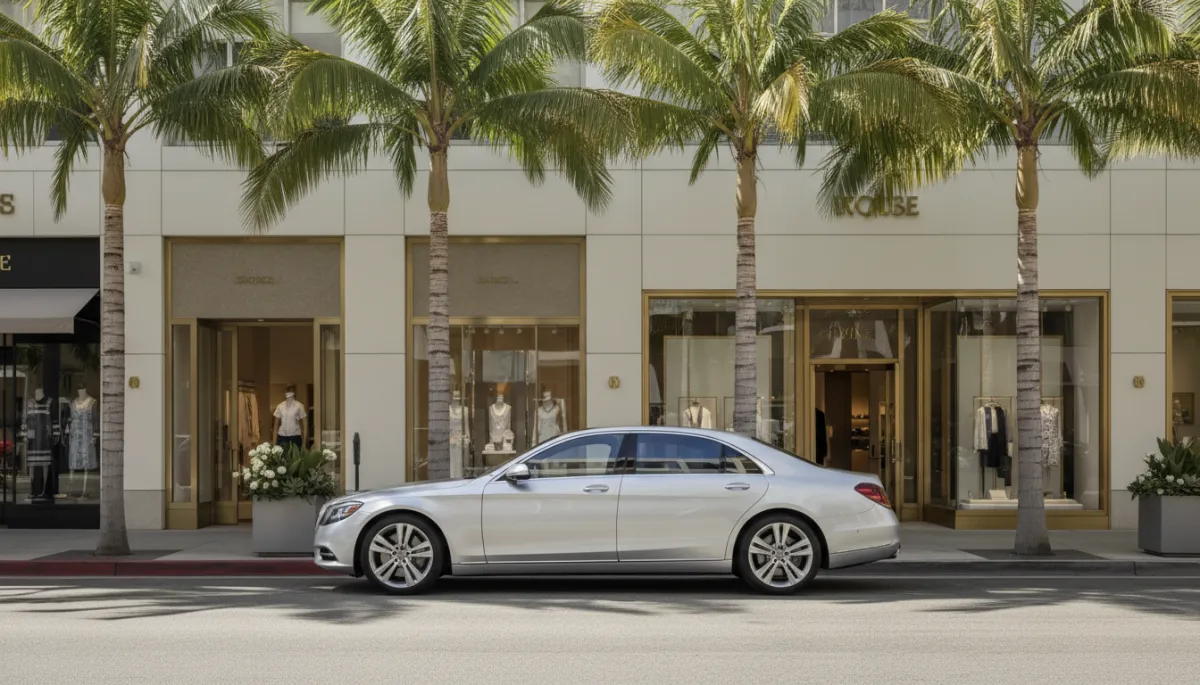
A comfortable luxury sedan is ideal for navigating Beverly Hills and nearby city boulevards.
Santa Monica, Malibu, and Laguna Beach: Coastal Towns Worth the Stop
While the Pacific Coast Highway provides the backbone of coastal driving, the individual towns along the route each offer a distinct personality. Santa Monica combines a lively pier and shopping districts with bike paths and wide beaches. Malibu is more spread out and upscale, with hidden coves, surf breaks, and cliffside homes. Farther south, Laguna Beach in Orange County delivers a walkable village feel, art galleries, and coves framed by rocky outcrops and tide pools. Each destination rewards travelers who slow down and explore beyond the main road.
Ideal Vehicles for Coastal Town Hopping
For a multi-stop coastal itinerary that includes Santa Monica, Malibu, and Laguna Beach, a convertible or fuel-efficient luxury sedan is an excellent choice. A convertible enhances the beach-town atmosphere, while a sedan offers trunk space for beach gear, shopping bags, and photography equipment. If you are traveling with a family or a group of friends, a midsize SUV provides additional seating and cargo capacity while remaining manageable in parking lots and garages near the beach.
Parking, Fuel, and Photography in Coastal Towns
Parking dynamics vary by town. Santa Monica offers numerous public structures near the Third Street Promenade and the pier, but they can fill quickly on weekends and holidays. Malibu’s parking is more fragmented, with a mix of small lots and roadside spaces near beach access points; pay close attention to signage to avoid no-parking zones. Laguna Beach has both metered street parking and central garages, with shuttle options during busy seasons. Choosing a vehicle that is not excessively large will make it easier to take advantage of smaller spaces that oversized vehicles cannot use.
Fuel stations are relatively abundant along the coastal corridor, but prices can be higher in some beachfront areas. A fuel-efficient convertible or sedan can reduce overall trip costs, particularly if you plan to drive the full stretch from Malibu to Laguna Beach and back. For photography, seek out elevated viewpoints above Santa Monica, roadside pullouts in Malibu that overlook the shoreline, and designated overlooks in Laguna that frame the town and coves. Sunrise and sunset are particularly rewarding, and a car with a secure trunk allows you to store camera gear safely while you walk.
Matching Your Vehicle to Your Los Angeles Itinerary
Because Los Angeles offers such diverse driving experiences, it is worth thinking strategically about which vehicle best matches your priorities. For many visitors, the ideal solution is to choose a single versatile rental that can handle coastal drives, city streets, and occasional canyon or mountain excursions. Others may prefer to focus on one type of experience—such as coastal cruising or urban exploration—and select a vehicle optimized for that purpose. Below are some general guidelines to help you decide:
Coastal drives (Pacific Coast Highway, Santa Monica, Malibu, Laguna Beach): Convertibles and fuel-efficient luxury sedans are ideal, offering open views, comfort, and reasonable fuel consumption for longer distances.
City and neighborhood exploration (Beverly Hills, West Hollywood, Downtown): Luxury sedans provide a refined driving experience, easy parking, and strong fuel economy for stop-and-go traffic.
Canyon and mountain routes (Topanga Canyon, Angeles Crest Highway): SUVs and Jeeps offer extra ground clearance, stability, and cargo space for outdoor gear, with all-wheel drive as a plus for higher-elevation drives.
When comparing options, consider not just daily rental rates but also fuel efficiency, parking convenience, and how the vehicle will feel after several hours behind the wheel. Features such as adaptive cruise control, comfortable seating, and a quality sound system can significantly enhance long scenic drives, especially if you plan to spend multiple days exploring the region by car.
Practical Travel Tips: Parking, Fuel Efficiency, Weather, and Traffic Patterns
Parking Strategies Across Los Angeles
Parking is one of the biggest concerns for visitors driving in Los Angeles, but a bit of planning goes a long way. In dense areas like Santa Monica, West Hollywood, and Downtown LA, prioritize public garages over circling blocks for street spaces; this saves time and reduces the risk of parking violations. In residential neighborhoods near popular attractions, always respect permit-only zones and driveway clearances. For scenic overlooks and trailheads, use designated lots or signed roadside areas, and avoid blocking narrow canyon roads or private access points.
Maximizing Fuel Efficiency on Scenic Drives
Fuel efficiency matters on longer itineraries that combine multiple routes, such as driving from Beverly Hills to Malibu, continuing up PCH, and then heading inland toward Angeles Crest. To reduce fuel consumption:
Maintain steady speeds on highways and avoid rapid acceleration or heavy braking whenever possible.
Use cruise control on open stretches of PCH or freeways when traffic allows.
Plan routes to minimize backtracking; group nearby attractions on the same day.
Keep tire pressure within recommended ranges, as underinflated tires reduce efficiency.
Selecting a vehicle class with good mileage—such as a modern convertible or luxury sedan with efficient engines—can significantly reduce fuel costs while still delivering a premium driving experience.
Understanding Los Angeles Weather and Traffic Patterns
Los Angeles is known for its sunshine, but microclimates can vary between the coast, valleys, and mountains. Coastal areas like Santa Monica and Malibu may experience morning marine layer clouds, which typically burn off by midday. Inland valleys and canyons can be significantly warmer in summer, while mountain routes like Angeles Crest bring cooler temperatures and occasional snow in winter. Always check the forecast for each area you plan to visit, not just the central city, and pack layers accordingly.
Traffic patterns are equally important. Weekday rush hours (roughly 7–10 a.m. and 3–7 p.m.) can slow freeways and major boulevards substantially. When possible, schedule your longest scenic drives for mid-morning or early afternoon, and reserve peak traffic times for stationary activities such as dining, shopping, or visiting museums. On weekends, coastal routes and tourist hotspots can be busiest from late morning through sunset; early starts are the best way to secure parking and enjoy quieter roads.
Planning Your Scenic Drive Itinerary in Los Angeles
A thoughtful itinerary allows you to experience multiple iconic routes without feeling rushed. Consider dedicating one day primarily to the coast, another to hills and canyons, and a third to city neighborhoods and cultural attractions. For example, you might:
Spend a “Coastal Day” driving from Santa Monica to Malibu along PCH, stopping at beaches and viewpoints, and optionally continuing south on another day to explore Laguna Beach and Orange County’s coastal towns.
Design a “Hills and Mountains Day” that combines Mulholland Drive, Topanga Canyon, and, if time allows, a partial excursion onto Angeles Crest Highway for mountain vistas.
Enjoy a “City and Culture Day” focused on Beverly Hills, West Hollywood, and central Los Angeles, using a luxury sedan to navigate between museums, shopping districts, and dining destinations.
Build buffer time into your schedule for unplanned stops—an overlook you discover on Mulholland, a café in Topanga that catches your eye, or a beach in Malibu that invites a longer stay. Having a comfortable, well-equipped vehicle means you can adapt your plans on the fly without sacrificing comfort or convenience.
How 525i Guys Simplifies Premium Vehicle Rentals for Scenic LA Drives
Selecting the right vehicle is central to enjoying Los Angeles scenic drives, and that is where specialized rental providers like 525i Guys make a meaningful difference. Rather than treating your rental car as a generic necessity, 525i Guys focuses on offering premium, well-maintained vehicles that enhance the driving experience itself. For travelers who want to match their car to specific routes—convertibles for the Pacific Coast Highway, luxury sedans for Beverly Hills and city exploration, and SUVs or Jeeps for canyon and mountain adventures—having access to a curated fleet is invaluable.
With 525i Guys, you can plan your itinerary and choose a vehicle that aligns with your priorities, whether that is open-air coastal cruising, refined urban comfort, or rugged versatility for outdoor excursions. Premium interiors, modern infotainment systems, and up-to-date safety features help reduce fatigue on longer drives and provide peace of mind in unfamiliar environments. For visitors flying into Los Angeles, streamlined booking and pickup processes mean you can transition quickly from the airport to the open road, maximizing your time on scenic routes rather than in rental counters or parking lots.
Because 525i Guys understands the specific demands of Los Angeles driving—from tight canyon roads and crowded beach parking to long freeway stretches—their vehicle selection is tailored to local conditions. This practical focus, combined with premium quality, makes them a convenient solution for travelers who view the car as an integral part of the journey, not just a way to get from point A to point B.
Bringing It All Together: Designing Your Perfect Los Angeles Scenic Drive
Scenic drives are one of the most rewarding ways to experience Los Angeles. From the sunlit curves of the Pacific Coast Highway to the skyline views of Mulholland Drive, the rustic charm of Topanga Canyon, the high-altitude vistas of Angeles Crest Highway, and the polished streets of Beverly Hills, each route offers a different perspective on the region. By thoughtfully pairing these drives with the right type of vehicle—convertibles for coastal routes, luxury sedans for city exploration, and SUVs or Jeeps for outdoor adventures—you can tailor your experience to your interests and comfort level.
Practical considerations such as parking availability, fuel efficiency, weather conditions, and traffic patterns are just as important as the views themselves. Planning ahead, starting early on busy days, and grouping nearby attractions into the same outing will help you spend more time enjoying the scenery and less time navigating logistical challenges. Prioritizing photography stops at golden hour, checking road conditions for mountain routes, and choosing a vehicle with modern safety and navigation features all contribute to a smoother, more enjoyable trip.
With a premium rental partner like 525i Guys, you can confidently select a vehicle that fits your itinerary, whether that means a convertible for a romantic Malibu sunset drive, a sophisticated sedan for a day of shopping and dining in Beverly Hills, or a capable SUV for exploring Angeles Crest and Topanga’s trailheads. When the car complements the route, every mile becomes part of the experience. With a bit of planning and the right set of keys, Los Angeles transforms from a sprawling metropolis into a collection of unforgettable drives waiting to be explored.