Stay in LA with a Car: Best Areas & Tips
Travel, Los Angeles, Trip Planning, Driving
Where to Stay in Los Angeles With a Car: Neighborhood Guide & Smart Driving Tips
Planning a trip to Los Angeles with a rental car can be incredibly rewarding— if you choose the right neighborhood. This guide walks you through the best areas to stay with a car, how traffic and parking really work in LA, and how to match your hotel location to your itinerary so you spend more time exploring and less time stuck on the 405.
Why Your Neighborhood Choice Matters More in Los Angeles
Los Angeles is not a compact, single-center city; it’s a huge patchwork of neighborhoods spread across more than 500 square miles. That geographic sprawl, combined with some of the most congested roads in the United States, makes your choice of where to stay especially important when you have a car.
According to TomTom’s 2025 Traffic Index, LA drivers lost about 83 hours in traffic over the year, with congestion levels near 60% and evening rush-hour speeds dropping below 25 km/h. The Federal Highway Administration’s Urban Congestion Report shows more than 8 hours of congested travel per day in late 2025. In other words, if you pick the wrong home base, you can easily spend hours each day crawling along the freeway instead of enjoying the city’s beaches, museums, and restaurants.
Parking is another major factor. Recent 2026 data from Orbitz, Expedia, and cost guides show that hotel parking in Los Angeles often runs between $35 and $55 per night for self-parking and $55 to $75+ for valet, with some luxury properties charging up to $100 per night. Downtown examples like the Westin Bonaventure and the Biltmore illustrate the range, from about $38/night for valet including tax at the former to $55–$71.50/night at the latter. Those fees add up quickly over a multi-night stay, especially if you’re paying for a rental car as well.
The good news: with smart planning, having a car can be a huge advantage in LA. You can reach beaches, canyons, theme parks, and day-trip destinations that are much harder to access by transit alone. The key is to choose a neighborhood that matches your itinerary and to minimize unnecessary driving by grouping nearby activities together.
Santa Monica: Best for Beach-Focused & Walkable Stays
Santa Monica is one of the most popular bases for visitors, especially those who want a classic Southern California beach experience with a walkable downtown. You’ll be near the Santa Monica Pier, Third Street Promenade, Palisades Park, and the beachfront bike path that runs south toward Venice.
Best for: Beach-focused travelers, couples, families who want to walk to restaurants and the ocean, visitors who don’t plan to drive every day.
Nearby attractions: Santa Monica Pier, Pacific Park, Tongva Park, Venice Beach, Malibu (a short coastal drive north), and access to the Metro E Line into Downtown LA if you want to avoid driving for a day.
With a car, Santa Monica is a good base for coastal drives and day trips up to Malibu or inland to the Getty Center. However, reaching areas like Downtown, Universal Studios, or Pasadena in rush hour can be slow. The I‑10, 405, and surface streets all back up during peak times, so expect longer travel times if you plan cross-city excursions in the morning or late afternoon.
Parking in Santa Monica hotels tends to be on the higher end of the LA range. Many beachfront and upscale properties charge $50–$75+ per night for valet, and self-parking can still be $35–$55. Street parking is heavily regulated, with meters, time limits, and residential permit zones, so you should not rely on free curbside options overnight. Always check the most current rules on the City of Santa Monica website or posted street signs before leaving your car.
West Hollywood: Nightlife, Central Access & Dining
West Hollywood (WeHo) is a compact, lively area known for nightlife, dining, and shopping, especially along the Sunset Strip and Santa Monica Boulevard. It sits roughly between Beverly Hills and Hollywood, making it a central base for exploring multiple parts of the city by car or ride-share.
Best for: First-time visitors who want a central location, nightlife lovers, foodies, small groups of friends, and couples who don’t mind paying a bit more for a buzzy atmosphere.
Nearby attractions: Sunset Strip venues, Melrose Avenue shopping, the comedy clubs along Sunset, quick drives to Beverly Hills, the Hollywood Walk of Fame, and the Hollywood Bowl (though you may still prefer ride-share for concerts to avoid parking headaches).
Traffic around WeHo is busy but manageable if you avoid peak rush hours. You can drive west to Beverly Hills and Santa Monica or east toward Hollywood and Downtown, but each of those trips can stretch well beyond the map distance during congested times. Plan extra time if you’re heading to a timed attraction like a studio tour or dinner reservation across town.
Many West Hollywood hotels are boutique or upscale, and parking prices reflect that. Expect $40–$75/night for parking, often valet only. Some properties may have limited self-parking or tight garages that are less convenient for larger vehicles or SUVs, so this is a neighborhood where confirming parking details in advance is especially important.
Hollywood: Tourist Landmarks & Easy Freeway Access
Hollywood puts you close to some of LA’s most famous tourist sights: the Hollywood Walk of Fame, TCL Chinese Theatre, the Dolby Theatre, and views of the Hollywood Sign. It also offers relatively quick access to the 101 freeway, which helps if you’re driving to Universal Studios Hollywood or heading toward Downtown or the Valley.
Best for: First-time visitors who want to be near iconic Hollywood sights, travelers planning a day at Universal Studios, and those who value freeway access for wider exploring.
Nearby attractions: Walk of Fame, Hollywood & Highland complex, Hollywood Bowl, Griffith Observatory and Griffith Park (a short drive), and studio tours nearby in Burbank or Universal City.
Hollywood’s main tourist corridors can feel crowded and touristy, but they’re convenient if you’re checking off classic LA sights. Driving north into the Hollywood Hills or east toward Griffith Park involves winding roads, so a comfortable, well-sized vehicle can make those drives more pleasant—especially if you’re traveling with family or friends and their luggage.
Hotel parking in Hollywood generally falls within the citywide averages: self-parking often around $35–$55/night, and valet in the $55–$75 range. Some hotels share garages with retail complexes and may charge different rates for overnight versus day parking, so check your booking details and recent reviews or call the property directly for the most current information.
Beverly Hills & Beverly Grove: Upscale, Central, and Shopping-Friendly
Beverly Hills and the adjacent Beverly Grove area offer an upscale, central base with tree-lined streets, high-end shopping, and some of LA’s most recognizable addresses. Think Rodeo Drive, the Beverly Hills sign, and major shopping centers like The Grove and the Beverly Center just to the east in Beverly Grove.
Best for: Travelers seeking a more luxurious or quiet base, shoppers, visitors who want central access to both the Westside and Hollywood, and those comfortable with higher hotel and parking prices.
Nearby attractions: Rodeo Drive, The Grove, Original Farmers Market, Los Angeles County Museum of Art (LACMA), Petersen Automotive Museum, La Brea Tar Pits, and a relatively short drive to West Hollywood or the Fairfax District.
From a driving perspective, Beverly Hills and Beverly Grove are central but not immune to traffic. East–west streets like Wilshire, Beverly, and Santa Monica Boulevard can be slow at peak times. However, being in the middle of the city means many attractions are within a 20–40 minute drive outside of rush hour, which is relatively efficient by LA standards.
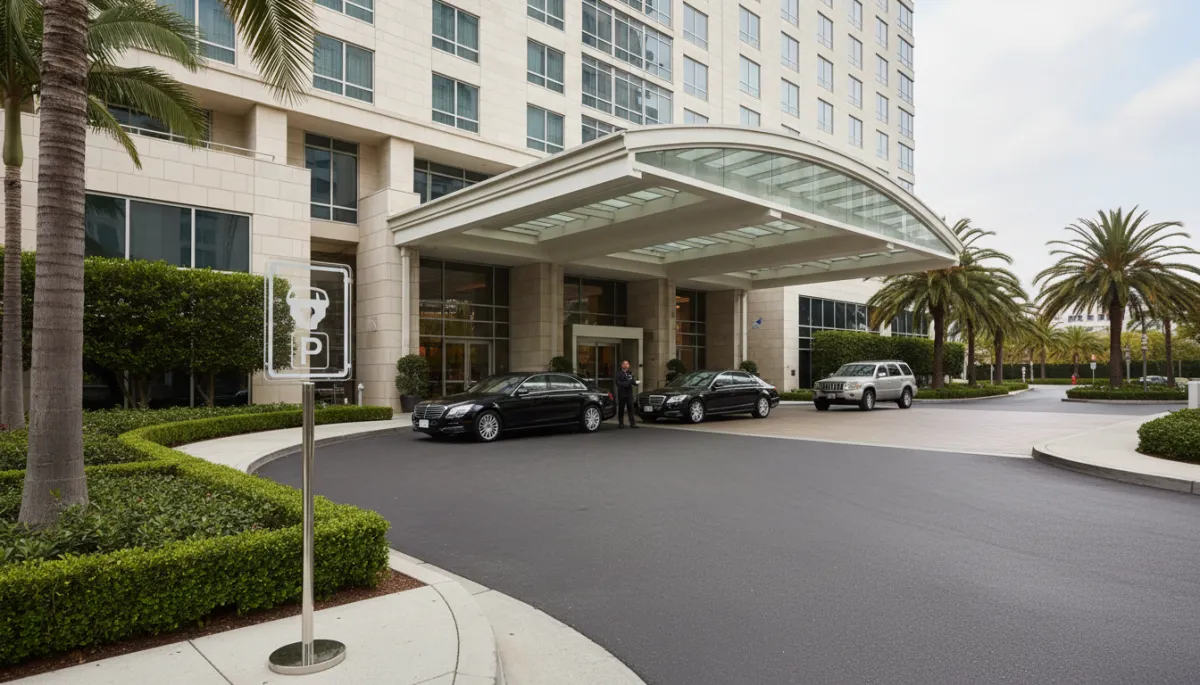
Nightly parking fees in LA can rival a budget hotel rate if you don’t plan ahead.
Parking at Beverly Hills properties, especially luxury hotels, can be at the top of the city range. It’s not unusual to see valet charges approaching $80–$100/night at the most exclusive addresses, with self-parking (where available) still in the $40–$60 range. Beverly Grove hotels and apartment-style stays may offer slightly more moderate pricing, but you should still factor in at least $35–$55/night unless you find a special deal or a property that includes parking.
Downtown Los Angeles (DTLA): Urban Energy & Transit Connections
Downtown Los Angeles has transformed over the past decade, with new hotels, restaurants, cultural institutions, and residential towers. It’s home to Crypto.com Arena, the Walt Disney Concert Hall, The Broad, MOCA, and the Historic Core. It’s also a major hub for the Metro rail system, including the expanding D Line that aims to connect Downtown more efficiently to the Westside in the coming years.
Best for: Travelers who like an urban city feel, museum and concert-goers, business travelers, and visitors who want to combine driving with occasional Metro rides to avoid traffic on certain days.
Nearby attractions: Walt Disney Concert Hall, The Broad, Grand Central Market, Little Tokyo, Arts District, LA Live, and easy transit connections to other neighborhoods and to Union Station for regional rail.
DTLA is one of the most congested parts of LA during weekday rush hours, with heavy commuter traffic and frequent events. However, if you’re staying Downtown and your plans are mostly in the area, you may be able to park the car and use Metro, walking, or ride-shares several days of your trip, which can significantly reduce driving stress. When you do drive, plan around peak hours as much as possible and use a navigation app with real-time traffic data.
Parking costs Downtown vary widely by hotel. As current examples, the Westin Bonaventure’s valet rate of about $38/night including tax is relatively moderate for the area, while the Biltmore charges around $55/night for self-parking and $71.50/night for valet. Many other properties fall somewhere in between. In addition, there are independent garages and lots that may offer lower overnight rates, but always confirm security, in/out privileges, and hours before relying on them for your entire stay.
Universal City & Burbank: Theme Parks and Studios
Universal City and nearby Burbank are excellent bases if your trip is centered around theme parks and studio experiences. Universal Studios Hollywood, CityWalk, and multiple major studio lots are located in this area, and you’ll be on the Valley side of the Hollywood Hills with quick access to the 101, 134, and 5 freeways for day trips north or east.
Best for: Families visiting Universal Studios, travelers doing multiple studio tours, visitors planning day trips to places like Six Flags Magic Mountain, and those flying into or out of Hollywood Burbank Airport (BUR).
Nearby attractions: Universal Studios Hollywood, Universal CityWalk, Warner Bros. Studio Tour, Griffith Park and the LA Zoo, and relatively easy freeway access to Pasadena and the San Fernando Valley.
Traffic here is still LA traffic—busy at rush hour—but you avoid some of the worst Westside congestion. Driving from Burbank to Downtown or Hollywood is usually more predictable than crossing from Santa Monica to the east side. For families, not having to cross the entire city each day can make mornings smoother and evenings less tiring, especially with younger kids in the car seats.
Parking fees in Universal City and Burbank hotels vary but may be slightly lower on average than in Santa Monica or Beverly Hills, often in the $25–$45/night range depending on the property. Some family-oriented hotels offer packages that include discounted or bundled parking and park tickets, so it’s worth comparing total trip costs rather than just room rates alone.
Near LAX: Practical for Flyers and Short Stays
The area around Los Angeles International Airport (LAX) is not a traditional sightseeing neighborhood, but it can be very practical. Airport hotels cluster along Century Boulevard and nearby streets, with frequent shuttles to the terminals. This is especially useful if you have an early-morning departure, a late-night arrival, or a short layover that doesn’t justify driving deep into the city.
Best for: Travelers with early or late flights, one-night stays before or after a longer California road trip, budget-conscious visitors who prioritize convenience over scenery, and those picking up or dropping off rental cars at LAX.
Nearby attractions: Not many within walking distance, but you’re a short drive to Manhattan Beach, Playa del Rey, and the South Bay coastline if you have a few spare hours.
LAX and the surrounding roads are busy throughout the day, with peak traffic volumes around midday and early evening according to recent airport traffic generation reports. However, staying near the airport means you avoid long pre-flight drives from other parts of the city, which can be stressful if there’s an accident or unexpected delay on the freeway.
Parking at LAX hotels can be more reasonable than in some tourist neighborhoods, but you still need to budget for it. Many properties charge $25–$45/night for self-parking or valet. If you’re renting a car for a broader California itinerary, consider whether it makes sense to pick up your vehicle the morning after arrival instead of paying for both a car and hotel parking on a jet-lagged first night when you may not drive much anyway.
Check Hotel Parking Before You Book
In Los Angeles, hotel parking is not a minor detail—it’s a major line item in your trip budget. With typical rates ranging from about $35–$55/night for self-parking to $55–$75+ for valet, you could easily spend several hundred dollars on parking over a week-long stay. That’s on top of your rental car cost, fuel, and any tolls or airport fees associated with your booking.
💡 Pro Tip: Don’t rely on old blog posts or outdated screenshots for parking info. Always check your hotel’s official site, recent reviews, or a major booking platform for the most current parking prices and policies.
Before you hit “reserve,” confirm:
Whether the hotel offers self-parking, valet, or both.
The exact nightly rate for parking and whether taxes or service fees are added on top.
If parking includes in/out privileges or if you pay each time you exit the garage.
Any vehicle size limits (height restrictions, oversized vehicle surcharges) that might affect SUVs, vans, or roof boxes.
If you’re comparing a slightly cheaper hotel with higher parking fees against a slightly more expensive hotel with lower or included parking, do the math for your entire stay. The “cheaper” room may cost more overall once you factor in your car. Also, keep an eye on city regulations, such as updated meter hours or neighborhood permit zones, by checking official city or neighborhood websites if you plan any street parking.
Reduce Unnecessary Driving by Grouping Attractions Geographically
With congestion levels high and travel times unpredictable, one of the best ways to make LA more manageable with a car is to group your activities by area. Instead of zigzagging from Santa Monica to Downtown to Griffith Observatory in a single day, cluster your plans so that each day focuses on one region or corridor.
Beach Day: Spend the entire day in Santa Monica, Venice, and Malibu. Park once or twice, walk or bike between nearby spots, and avoid crossing town during rush hour.
Hollywood & Griffith Day: Visit the Walk of Fame, then drive up to Griffith Observatory and explore Griffith Park, perhaps timing your visit for sunset views of the city lights.
Downtown Culture Day: Park in DTLA and visit The Broad, Disney Hall, Grand Central Market, and the Arts District. Consider using Metro or walking between stops rather than moving your car repeatedly.
This strategy reduces both stress and costs. Fewer long cross-city drives mean less time in traffic and lower fuel usage, and fewer parking “ins and outs” can help you avoid extra charges in some garages. For up-to-date Metro maps, schedules, and any service alerts that might affect your driving-versus-transit decisions, check the official LA Metro website before and during your trip.
Sample Traveler Scenarios: Matching Neighborhoods to Your Trip
1. Beach-Focused Traveler
If your dream LA trip is all about sand, sunsets, and ocean breezes, Santa Monica or a nearby coastal area like Venice or Manhattan Beach is likely your best bet. You might still want a car for day trips to Malibu, the Getty Villa, or inland neighborhoods, but you won’t need to drive every day. Look for hotels that either include parking or offer competitive self-parking and plan at least one or two car-free days where you walk, bike, or use local transit instead.
2. First-Time Visitor Hitting the Highlights
For a first visit that includes Hollywood, Beverly Hills, Santa Monica, Griffith Observatory, and maybe a day Downtown, West Hollywood or Beverly Grove makes a strong central base. You’ll have relatively even driving times to multiple areas and plenty of dining options near your hotel. Plan your days by corridor—one Westside day, one Hollywood/Griffith day, one Downtown/Arts District day—to keep drives manageable and avoid doubling back across town.
3. Family Trip with Theme Parks
Families planning multiple days at Universal Studios, plus maybe a studio tour and some time at Griffith Park or the LA Zoo, will find Universal City or Burbank very convenient. You’ll cut your morning commute to the parks, which is especially helpful with younger kids. If Disneyland is also on your list, consider splitting your stay—several nights in Burbank for Universal and studio days, then a couple of nights in Anaheim for Disney to avoid repeated long drives on the 5 freeway.
4. Day Trip Planner: Beyond the City Limits
If you’re using LA as a base for day trips—to Malibu, Santa Barbara, Joshua Tree, Orange County beaches, or wine regions—you’ll want a neighborhood with good freeway access. Hollywood, Burbank, or even parts of Beverly Grove can work well, depending on which direction you’re headed. A car is essential for most of these outings, and you’ll want to leave early to beat morning traffic out of the city and return after the worst of the evening rush whenever possible.
5. Travelers with Early or Late Flights
If your flight arrives close to midnight or departs at sunrise, staying near LAX the night before or after can greatly reduce stress. You avoid unpredictable cross-city drives at odd hours and can return or pick up your rental car without rushing. For the rest of your stay, you might move to a more central or scenic neighborhood that better matches your itinerary.
Choosing the Right Vehicle Once Your Plans Are Set
Once you’ve decided where you’ll stay, how many people are traveling, how much luggage you’ll bring, and what kinds of day trips you’re planning, it becomes much easier to choose the right vehicle. For example, a compact car can be easier to park in tight hotel garages in West Hollywood or Downtown, while a larger sedan or SUV might be more comfortable for families doing longer drives to theme parks or out-of-town excursions.
Travelers who determine that having a vehicle truly fits their LA itinerary can explore dedicated rental fleets designed around comfort and practicality. With 525i Guys, for instance, you can review a curated selection of vehicles and match them to your stay and group size. Once you know your hotel’s parking situation, the number of passengers, your luggage needs, and your planned mix of city driving and day trips, you can choose a car from the fleet that balances interior space with maneuverability and parking ease. That way, your vehicle supports your itinerary instead of working against it in LA’s busy streets and garages.
Practical Checklist for Staying in Los Angeles With a Car
Before you finalize your booking and vehicle, run through this quick checklist to make sure your accommodation, parking, and car choice all work together:
Accommodation location: Does your neighborhood match your top priorities (beach, nightlife, theme parks, museums, or day trips)? Are you central to most of your plans, or will you be crossing the city daily?
Hotel parking: Have you confirmed current nightly rates, whether parking is self, valet, or both, and any size restrictions? Compare total parking costs for your full stay, not just nightly room rates.
Main attractions: List your must-see sights and group them geographically. How many days can you dedicate to each area so you ’re not constantly driving back and forth across town?
Airport distance: How far is your hotel from LAX or Burbank, and at what time of day are you traveling? Would it be wise to stay near the airport for your first or last night to avoid stressful rush-hour drives before a flight?
Day trips: Are you planning longer drives out of the city? Make sure your base offers good freeway access in the directions you’ll be traveling, and check current road conditions and travel times using authoritative sources or navigation apps before you set out each day.
Passenger count: How many people will be in the car most of the time? Ensure everyone has enough space for comfort, especially on longer drives or in traffic that may move slowly for long stretches.
Luggage: Consider how many suitcases, strollers, or gear items you’ll have. Check trunk capacity and whether your chosen hotel’s parking setup (tight ramps, low ceilings) is compatible with larger vehicles or roof racks if you’re bringing extra equipment.
Vehicle type: Based on all of the above, choose a car that fits your needs. If you’ve decided that driving is the right choice for your LA trip, review options like the fleet at 525i Guys and match a vehicle to your neighborhood, parking constraints, group size, and planned driving distances. A well-chosen car can make navigating LA’s traffic and parking systems significantly more comfortable.
Finally, keep an eye on up-to-date information from authoritative sources: official city parking pages for meter and permit rules, LA Metro’s website for transit options that might complement your driving days, and LAX or Burbank airport sites for current pick-up, drop-off, and rental car procedures. With the right neighborhood, smart parking choices, and a vehicle that matches your itinerary, staying in Los Angeles with a car can open up far more of the region than you’d comfortably reach any other way.