True Cost of Renting a Car in Los Angeles
Travel, Luxury Car Rental, Los Angeles
The True Cost of Renting a Car in Los Angeles
In Los Angeles, the advertised daily rate is only the starting point. To understand how much a rental car really costs, travelers need to look at every part of the transportation budget, from airport fees and insurance to parking and fuel.
Why the Advertised Daily Rate Is Only the Beginning
Los Angeles is a city built around the car. For many visitors, renting a vehicle feels non‑negotiable: it offers freedom, privacy, and the ability to explore everything from Malibu to Downtown on your own schedule. Yet the price you see in a search result—such as an economy car “from $32 per day” citywide or “from $43 per day” at Los Angeles International Airport (LAX), according to recent averages from Cheapflights—rarely reflects what you will actually pay once the trip is over.
The true cost of renting a car in Los Angeles is a combination of the base vehicle rate, required taxes and fees, airport‑related charges, insurance or optional protection, fuel or charging, hotel parking, attraction parking, and any extras you add. Understanding each of these categories allows you to compare options realistically and choose a vehicle that matches both your budget and your travel style—without surprises at checkout.
1. Base Rental Rate: The Visible Part of the Iceberg
The base rental rate is the price most travelers focus on. It is typically quoted as a daily amount before taxes and fees. In September 2026, data from Cheapflights indicates that the average daily rate across Los Angeles is around $32, with some economy deals from roughly $13 per day. At LAX, the average is higher—about $43 per day—with deals starting around $14 per day. A separate Car Rental Price Index report shows that an intermediate car booked for a week at LAX has a median rate near $70 per day, with full‑size and premium vehicles moving into the $80–$90+ range and 7‑seat vehicles over $100 per day.
Location matters as much as vehicle class. For example, recent Hertz data shows average daily rates in the $46–$75 range at several city locations, while the on‑airport counter at LAX can reach average daily prices between approximately $144 and $155, with “good deal” rates around $100 per day. These figures underline a key point: two travelers renting the same category of car on the same dates can pay very different base rates depending on where they pick up the vehicle and how far in advance they book.
2. Taxes and Applicable Fees: The Mandatory Add‑Ons
Once you select a car, state and local taxes, plus mandatory surcharges, are added to the base rate. At LAX, calculators such as lax‑car‑rental.com show that taxes and surcharges—including the airport concession recovery fee—often total around 21.4% of the time‑and‑mileage portion of the rental. On a $45 per‑day base rate, that translates to roughly $9.55 per day in taxes and surcharges before any airport‑specific daily fees are included.
Even when you rent away from the airport, you should expect sales tax and certain local or tourism‑related fees. These are not optional, and they can significantly change your effective daily cost. A car that appears to be $45 per day can easily approach the mid‑$60s once taxes and required fees are added, even before insurance, fuel, or parking are considered.
3. Airport‑Related Charges at LAX and Beyond
Renting on‑airport at LAX offers convenience but comes with specific mandatory charges. According to current information from LAX ground transportation resources and fee calculators, all on‑airport rentals are subject to:
A Customer Facility Charge (CFC) of $9.00 per rental day, capped at five days (maximum of $45 per rental).
A Vehicle License Recovery Fee of approximately $1.80 per day.
The previously mentioned taxes and surcharges of around 21.4% of the base rate.
On a three‑day LAX rental with a $45 daily base rate, the LAX calculator example yields an estimated total near $196, including $27 in CFC charges and $5.40 in license recovery fees, before optional extras. Over a five‑day stay, the CFC cap at $45 becomes relevant, but the fee still represents a meaningful portion of the transportation budget. Off‑airport providers may avoid some of these specific airport charges, but they may require additional time, rideshare transfers, or shuttles, which also carry a cost in money or convenience.
4. Insurance and Optional Protection: Peace of Mind at a Price
Insurance is one of the most misunderstood parts of renting a car in Los Angeles. The city’s dense traffic, busy freeways, and unfamiliar streets make protection especially important, yet travelers frequently arrive at the counter unsure of what they already have through personal auto policies, credit cards, or travel insurance. As a result, they either buy overlapping coverage or decline protection they might later wish they had accepted.
Common options include collision damage waivers, liability supplements, personal accident coverage, and coverage for personal effects. Prices vary by provider and vehicle type, and reputable companies will disclose the daily cost before you sign. The key is to evaluate coverage based on your risk tolerance and existing protections, rather than reacting under pressure at the counter. In a luxury or premium vehicle, potential repair costs and downtime charges can be higher, which makes understanding this category especially important for guests choosing upscale cars.
5. Fuel or EV Charging: The Cost of Every Mile in Los Angeles
Fuel prices in California are consistently among the highest in the United States, and Los Angeles is no exception. While exact pump prices move daily, visitors should plan for gasoline to be meaningfully more expensive than in many other states. Your actual fuel cost will depend on how far you drive, the vehicle’s efficiency, and whether you return the car full or pay a refueling service charge, which is usually higher than local pump rates.
Electric vehicles change the equation but do not eliminate energy costs. Public charging networks in Los Angeles may charge per kilowatt‑hour, per minute, or per session, and hotel charging can range from complimentary to premium‑priced. Fast‑charging on road trips is convenient, yet often more expensive than slower overnight charging. When comparing a luxury EV to a gasoline vehicle, consider where you will charge, how frequently, and whether your accommodation offers convenient charging on‑site or nearby. The most economical option on paper can become less attractive if you need to detour regularly to find a fast charger or pay higher rates in peak periods.
6. The Parking Cost Travelers Often Forget
In Los Angeles, parking is where many rental car budgets quietly unravel. The city’s parking ecosystem ranges from street meters under LA Express Park™ to hotel garages and private lots at major attractions. Current city data shows that on‑street meters across Los Angeles generally range from about $1.00 to $8.50 per hour, with dynamic pricing in high‑demand zones such as Downtown, Hollywood, Westwood, and Venice Beach. Rates are regularly adjusted to maintain a target occupancy level, and recent changes in 2026 have nudged many peak‑time prices higher by a few cents per hour.
Hotel parking is often a larger line item than travelers expect. Monthly parking data for Los Angeles places average off‑street parking around $206 per month, with common ranges between $154 and $283. When broken down into nightly hotel charges, it is easy to see how a stay in a central neighborhood can include daily parking fees that rival or exceed the base rental rate. Upscale hotels near popular areas frequently charge a premium for on‑site or valet parking, especially for larger vehicles and SUVs, which take more space in the garage.
Attraction and destination parking adds another layer. Whether you are visiting a museum, a beach, a studio tour, or a sports venue, expect to encounter paid lots and garages. A day of sightseeing might involve multiple parking sessions—each with its own rate structure and time limits. Over a five‑day visit, it is common for travelers to spend the equivalent of several extra rental days purely on parking if they are not attentive to where they leave the car and for how long. When planning your transportation budget, it is wise to treat parking as its own category rather than an incidental expense.
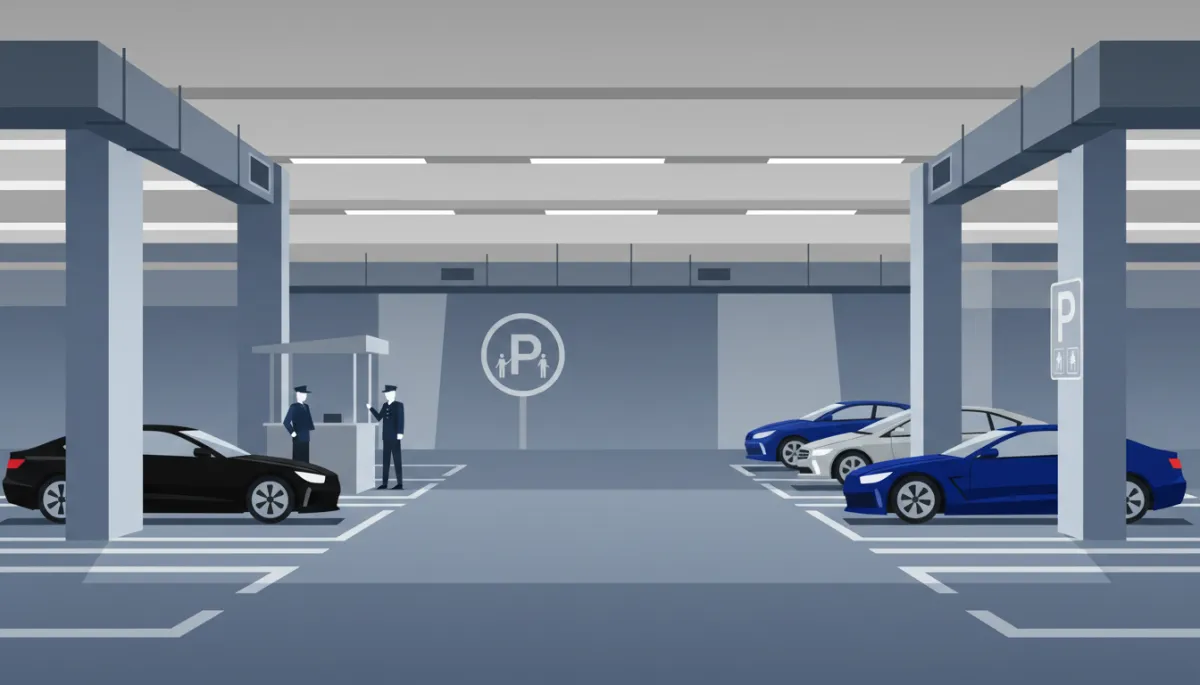
Nightly hotel parking and daily attraction garages can rival your base rental rate.
7. Additional Drivers and Optional Extras: Small Choices, Real Money
Each additional decision at the rental counter can subtly increase the total cost. Adding an extra driver may incur a daily fee, depending on the provider and any loyalty or corporate agreements in place. For couples or families planning to share driving duties on long freeway segments, this can be a worthwhile investment in safety and comfort, but it should be anticipated in the budget rather than discovered later on the invoice.
Optional extras such as GPS units, child seats, toll transponders, and roadside assistance packages also carry daily or per‑use charges. Many travelers now rely on smartphone navigation instead of dedicated GPS devices, but child safety seats and toll solutions remain important add‑ons for some itineraries. When comparing offers, it is essential to include any extras you know you will need, and to verify whether bringing your own equipment is permitted and practical for your flight and luggage plans.
8. How Different Traveler Profiles Experience the Real Cost
Because every trip is different, there is no single “cheapest” category of rental car in Los Angeles. Instead, the most suitable vehicle depends on how you travel, where you stay, and what you plan to do. The following profiles illustrate how the same city can create very different cost structures for different guests, even before personal preferences come into play.
A. A Couple on a Five‑Day City Escape
A couple staying in West Hollywood or Downtown for five nights, focusing on restaurants, galleries, and a few scenic drives, may be drawn to an economy or compact car at first glance. A smaller vehicle can be easier to park in tight garages and more efficient at the pump, which helps offset city parking and fuel costs. However, if they are staying at a boutique property with premium valet parking, the nightly parking charge might be similar regardless of vehicle size. In this case, upgrading to a more comfortable sedan or a stylish coupe could make the driving experience more enjoyable without materially changing the parking budget, as long as fuel consumption remains reasonable for their mileage.
B. A Family with Luggage and Attractions on the Agenda
A family visiting Los Angeles with multiple suitcases, strollers, and plans for theme parks or beach days will evaluate cost through a different lens. A larger SUV or spacious crossover may carry a higher base rate than a compact car, but it can reduce the need for an additional vehicle, taxis, or rideshares when everyone and everything needs to travel together. Parking at attractions is often priced per vehicle, not per seat, so a single appropriately sized vehicle is usually more practical than splitting the group. The key for this profile is to weigh the higher daily rate and fuel usage against the comfort, safety, and logistical ease of having ample space for passengers and luggage on busy days.
C. A Business Traveler Focused on Meetings and Image
For a business traveler, the rental car is part of their professional presentation. Arriving at client meetings or luxury hotels in a refined sedan or premium vehicle can support the image they wish to project. In this scenario, the incremental cost of a more luxurious car is often offset by corporate travel policies, time saved compared to rideshares, and the ability to work comfortably between appointments. Parking may be validated at certain venues, and airport fees become part of a broader expense report. The total cost still matters, but it is evaluated in the context of productivity, reliability, and brand alignment rather than pure price minimization.
D. A Longer‑Distance Driver Exploring Beyond Los Angeles
Travelers planning to drive from Los Angeles to Santa Barbara, Palm Springs, San Diego, or along the Pacific Coast Highway will likely spend more hours behind the wheel and cover more miles than someone staying within the city core. For them, fuel efficiency, seating comfort, and driving dynamics become central budget and experience factors. A mid‑size or full‑size sedan with strong highway efficiency may offer a balanced solution, while an EV can be appealing if charging stops align naturally with meal or sightseeing breaks. Neither gasoline nor electric options are automatically cheaper; the real difference lies in how far you drive, which routes you choose, and how conveniently you can refuel or recharge along the way.
Across all these profiles, the most suitable vehicle is the one that aligns with the traveler’s itinerary, parking environment, and comfort expectations—not simply the car with the lowest advertised daily rate on a search page.
9. Evaluating Your Transportation Needs Before You Book
Before committing to a rental, it is helpful to step back and define what you truly need from your Los Angeles vehicle. Consider the neighborhoods you will visit, the type of property you are staying in, and your daily schedule. Are you primarily attending meetings in central areas, or will you be driving to coastal viewpoints, hillside homes, and out‑of‑town destinations? Will you park overnight in a hotel garage, on the street, or in a residential driveway? Do you value a quiet, refined cabin and advanced driver‑assistance features for long freeway segments, or is maximum cargo space your priority?
By clarifying these points, you can move beyond a simple price comparison and instead match vehicle categories to your real‑world plans. This is also the moment to decide whether you prefer gasoline or electric power, how many drivers you will have, and whether you want additional amenities such as premium audio, leather seating, or enhanced safety technology. Once you understand your needs, you can explore providers that offer a curated fleet aligned with your expectations rather than a generic selection of anonymous vehicles.
10. Introducing 525i Guys: A Curated Los Angeles Fleet to Match Your Style
Once you have a clear picture of how you plan to use your rental, it becomes easier to choose a partner that aligns with your expectations. 525i Guys is a Los Angeles rental option designed for travelers who value both transparency and driving experience. Rather than focusing solely on the lowest daily rate, the brand emphasizes vehicles that feel at home in Los Angeles—cars that are comfortable in traffic, composed on the freeway, and visually at ease under palm‑lined boulevards and hotel porte‑cochères.
The 525i Guys fleet includes different categories tailored to distinct travel styles, from refined sedans suited to business guests to versatile vehicles for couples and small groups. By visiting https://525iguys.com/fleet, travelers can compare options side by side, considering not just the daily rate but also comfort, luggage capacity, and how each model fits their planned routes and parking environments. This approach encourages guests to design their transportation around their itinerary, selecting a car that supports their experience rather than simply reacting to the lowest headline number.
In a city where the difference between an enjoyable drive and a tiring commute can come down to seating, suspension tuning, and cabin quietness, choosing a thoughtfully curated vehicle is a subtle but meaningful luxury. 525i Guys positions itself as a partner in that decision, inviting travelers to align their car with their plans from the outset.
11. Rental Car Budget Checklist: Plan Before You Reserve
Before you confirm your Los Angeles rental, use this concise checklist to review every major cost category. Treat it as a pre‑booking audit to ensure that the car you select fits both your budget and your expectations.
Trip dates and pickup location – Note whether you are renting at LAX or an off‑airport site, and confirm any differences in base rates and mandatory fees.
Vehicle category – Decide whether you need a compact, sedan, SUV, or specialty vehicle based on passengers, luggage, and planned routes, then compare models on providers’ fleet pages such as the 525i Guys selection.
Base rate versus total – Look beyond the daily headline price and review the estimated total including taxes, airport fees, and any required surcharges for your dates and location.
Insurance and protection – Confirm what coverage you already have through personal policies or credit cards, then decide in advance which rental protections you will accept or decline and at what daily cost.
Fuel or charging plan – Estimate your mileage, research current gasoline prices, or identify likely charging locations, and choose a vehicle whose efficiency and energy source match your driving pattern.
Hotel parking – Contact your hotel or short‑term rental host to confirm nightly parking rates, valet policies, and any size restrictions that might affect larger vehicles or SUVs.
Attraction and destination parking – Review a sample day of sightseeing and list the likely parking environments (beaches, museums, stadiums, shopping areas) to anticipate cumulative daily parking spend.
Additional drivers – Decide who will drive, confirm any age‑related conditions, and include any additional driver fees in your budget if applicable.
Optional extras – Determine whether you need child seats, a toll solution, or other optional services, and compare the cost of renting these items versus bringing your own when allowed.
Buffer for changes – Set aside a margin in your transportation budget for schedule shifts, route changes, or upgraded vehicle choices once you arrive and see how you are using the car.
12. Choosing on Total Value, Not Just the Lowest Advertised Rate
When you view all of these elements together, the pattern becomes clear: in Los Angeles, the real cost of a rental car is shaped as much by context as by the initial price. Airport fees, parking, insurance, and energy costs can collectively exceed the base rate over the course of a stay, particularly for guests who drive frequently or park in premium locations. A car that appears inexpensive on a search results page may end up costing more in practice if it is inefficient, uncomfortable for your group, or poorly suited to your hotel’s parking environment.
A more refined approach is to compare complete trip scenarios: estimate your mileage, map your likely parking costs, and then evaluate vehicles not only on headline price but also on comfort, practicality, and how naturally they fit your itinerary. For some travelers, that may mean a compact sedan that slips easily into city garages. For others, it may be a sophisticated luxury car that turns every freeway journey into a calm, quiet interlude between engagements. Providers such as 525i Guys, with a curated fleet and transparent information at https://525iguys.com/fleet, support this more thoughtful style of planning by letting you align vehicle choice with your real‑world plans from the outset.
Ultimately, the best rental for Los Angeles is not defined by the lowest advertised daily rate, but by how well the car serves your trip as a whole. When you account for base rates, taxes, airport fees, insurance, fuel or charging, hotel and attraction parking, and any extras you genuinely need, you gain a clear view of the true cost—and the freedom to choose a vehicle that feels right for the city and for you.