Winter Driving Tips for California Rental Cars
Winter Driving, California Rental Cars, Mountain Road Conditions
Are Ordinary Rental Cars Really Suitable for Winter Driving in California?
What works flawlessly for a sunny Los Angeles commute can be dangerously unprepared for Big Bear, the Grapevine, or a snow-covered mountain pass. Before you reserve a vehicle for a winter escape, it is essential to understand how California’s varied climates, tire types, chain-control laws, and rental agreements come together on the road.
California offers an extraordinary range of winter experiences within a single day’s drive. You can leave a sunlit boulevard in West Hollywood, cross dry freeways through the Valley, and within a few hours be navigating icy switchbacks toward Big Bear or threading through fog and snow on Interstate 5 over the Grapevine. The same ordinary rental car that feels effortless on Santa Monica Boulevard may be completely unsuited to winter driving in the Sierra or on a stormy pass toward Nevada.
To travel comfortably and safely, you need more than a generic “SUV request” on a booking form. You need to understand tires, all-wheel drive, chains, and California’s chain-control laws—and how these interact with the specific rental car you choose. This is especially true for luxury travelers who expect a seamless journey from Los Angeles to mountain resorts, national parks, or desert destinations via high passes and remote roads.
California Winter: From Coastal Sunshine to Mountain Snow in a Few Hours
California’s winter weather is intensely local. Along the coast and in much of the Los Angeles basin, winter often means cool rain at worst. Drive north or climb in elevation, however, and the story changes quickly:
Big Bear and San Bernardino Mountains: Regular snow, ice, and chain controls on roads such as Highway 330 and Highway 18. Caltrans frequently activates R‑1 or R‑2 requirements in storms, meaning chains or approved traction devices may be mandatory even for visitors arriving from sunny LA.
The Grapevine (Tejon Pass on I‑5): A critical route between Southern and Northern California, prone to heavy rain, fog, black ice, and occasional full closures in severe winter storms. Conditions can shift from dry to hazardous within a short stretch of freeway.
Mountain passes toward Nevada and national parks: I‑15 toward Las Vegas, Highways 395, 88, and 80, and access roads to Yosemite, Sequoia, and other parks can experience chain controls, closures, and rapidly changing visibility.
Caltrans and the California Highway Patrol (CHP) manage these conditions dynamically. Chain controls are not based on fixed calendar dates but on live assessments of snow and ice. According to Caltrans, chain requirements are activated when conditions warrant, and all vehicles—rental cars included—must comply with posted signs and checkpoints. Disregarding a “Chains Required” sign can lead to fines and, more importantly, serious safety risks.
Understanding Tires and Traction: Standard, All-Season, M+S, and Snow Tires
Before deciding whether an ordinary rental car is suitable for winter driving in California, you must understand the language of tires. The differences matter when you encounter snow, ice, or chain controls on mountain roads.
Standard Tires (Summer or Performance Tires)
Many vehicles—especially sporty sedans or high-performance models—are equipped with standard or summer-oriented tires. These are optimized for dry and wet pavement, responsive handling, and higher temperatures. Their rubber compounds harden in cold conditions, and their tread patterns are not designed to bite into snow or slush. On snow or ice, they can deliver dramatically reduced grip, even on an advanced luxury vehicle with electronic stability systems. For California mountain driving in winter, standard summer tires are generally inappropriate and may leave you unable to proceed when chain controls are in effect.
All-Season Tires
All-season tires are common on everyday passenger cars and many rental vehicles. They are designed to perform acceptably in a wide range of conditions, from dry to wet, and light snow. However, “all-season” does not mean “all conditions.” Their winter performance is limited compared with dedicated snow tires, particularly on packed snow and ice. They are a compromise that may be sufficient for cooler, wet-weather freeway driving but may not meet the traction needs or legal expectations in heavy snow or on steep mountain grades.
Tires Marked M+S (Mud and Snow) or Similar
The sidewall marking “M+S” or “M/S” indicates a tire with a tread pattern intended for better performance in mud and snow than a pure summer tire. In California, Caltrans refers to “snow-tread tires” as those marked M+S or with a mountain/snowflake symbol, and with a minimum tread depth of 6/32 inch. Under R‑1 chain controls, passenger vehicles under 6,000 lb equipped with snow tires on at least two drive wheels may be allowed to proceed without installing chains, but they must still carry approved traction devices in the vehicle. Under R‑2 conditions, AWD or 4WD vehicles with snow-tread tires on all four wheels may be exempt from installing chains, but again, chains must be carried in the vehicle as a condition of entering the chain-control area.
Dedicated Snow Tires (Winter Tires)
Dedicated snow tires, sometimes called winter tires, use specialized rubber compounds and aggressive tread patterns engineered for cold temperatures, snow, and ice. They often carry the three-peak mountain snowflake symbol, indicating they meet specific winter performance standards. On icy, slushy, or snow-packed roads, they offer substantially more traction and control than all-season or M+S-only tires. In California’s chain-control system, snow-tread tires are recognized, but they do not automatically eliminate the requirement to carry chains, and at the R‑3 level, chains or approved traction devices are required on all vehicles without exception, regardless of tire type.
AWD vs 4WD vs Chains: What Really Matters Under California Chain-Control Laws
Many travelers assume that an SUV with all-wheel drive (AWD) or four-wheel drive (4WD) makes chains unnecessary. In California, this assumption can lead to denied access at checkpoints or legal issues. Caltrans and CHP enforce chain-control levels—R‑1, R‑2, and R‑3—based on road conditions, not on the convenience of individual drivers or rental contracts.
AWD and 4WD: Helpful but Not a Free Pass
All-wheel drive (AWD) typically sends power to all four wheels automatically, adjusting as needed for traction. Four-wheel drive (4WD) often allows the driver to select high or low range for off-road or difficult conditions. Both systems improve traction when compared with two-wheel drive, but neither changes the chain-control rules by themselves. Under California’s R‑2 conditions, 4WD or AWD vehicles may be exempt from installing chains only if they are equipped with snow-tread tires on all four wheels. Even then, they must still carry approved traction devices in the vehicle. Under R‑3, every vehicle must install chains or traction devices, regardless of drivetrain or tires.
Tire Chains and Approved Traction Devices
California Vehicle Code Section 605 defines “tire traction devices” broadly, including traditional steel chains, cable-style chains, textile “snow socks,” and certain automatic traction devices. When Caltrans posts “Chains Required” signs, all vehicles entering that zone must carry chains or approved devices, and many must install them based on the R‑level in effect. CHP can turn vehicles around or issue citations if you attempt to proceed without required equipment. Once chains are installed, speeds are typically limited to around 25–30 mph for safety. For travelers in rental cars, this legal framework applies fully, regardless of whether the vehicle is personally owned or rented for a weekend in the mountains.
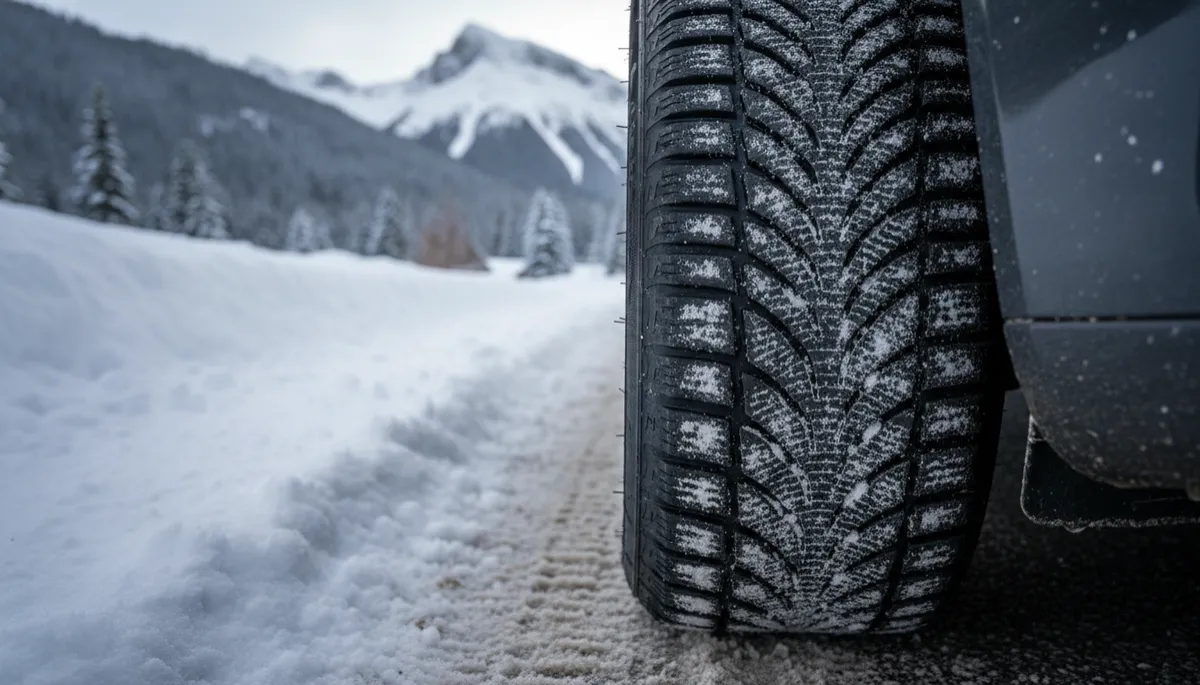
Tire markings such as M+S or snowflake symbols determine how your car is treated under chain-control rules.
Do Rental Cars Come With Snow Tires?
Many visitors assume that renting a vehicle in California for winter travel automatically means snow tires or at least M+S tires will be fitted. In practice, that is rarely the case. Major rental companies typically equip their fleets with standard all-season tires, optimized for year-round use in mostly mild conditions. Dedicated snow tires are uncommon in California rental fleets, especially in coastal cities such as Los Angeles, where demand is limited and winter storms are experienced mainly at higher elevations hours away from the rental counter.
Policies vary between companies and locations, but travelers should not assume that any rental car—sedan, SUV, or luxury model—comes with snow tires unless this is clearly confirmed in writing by the rental provider. Many vehicles will have M+S-marked all-season tires, which Caltrans may treat as snow-tread tires if tread depth meets the 6/32‑inch requirement. However, that is not guaranteed. If your plans include Big Bear, Tahoe, Yosemite, Sequoia, or any other winter-prone region, inspect the sidewall markings on your rental car’s tires before you depart and confirm what equipment, if any, is provided.
Luxury-focused renters, in particular, should be aware that high-performance trims may be fitted with performance-oriented rubber, which is excellent for dry Los Angeles boulevards but poorly suited to snow and ice. Choosing the right vehicle for California rental car winter driving is about more than brand and body style; it is about traction and legal compliance on the roads you intend to drive.
Can You Put Chains on a Rental Car?
This is where many travelers encounter a serious conflict. California law, enforced by Caltrans and CHP, may require that you carry and install chains or other traction devices under R‑1, R‑2, or R‑3 conditions. At the same time, many rental companies in California do not provide chains and explicitly prohibit installing them on their vehicles, even if you bring your own. Their concern is understandable: improperly fitted chains can damage wheels, tires, and fenders, and that damage is costly to repair.
The key point is that chain-control law and rental-company permission are two separate issues. Legally, if you encounter an R‑2 checkpoint on the way to a resort, CHP may require you to show that you have chains in the vehicle and, depending on your tires and drivetrain, to install them. If your rental contract forbids chains, you may be turned around at the checkpoint or risk violating your rental agreement and potentially your insurance coverage. The law does not adjust itself to accommodate rental policies; it is your responsibility as the driver to comply with both.
Before you depart Los Angeles for a winter destination, review your rental contract carefully. Confirm, in writing if possible, whether chains or other traction devices are allowed on your specific vehicle. If chains are prohibited, you may need to adjust your itinerary, plan to stop before chain-control zones, use shuttle services into national parks, or select a different vehicle or provider whose policies better align with your route and the season.
Real-World Scenarios: Is an Ordinary Rental Car Enough?
Los Angeles to Big Bear
A winter weekend in Big Bear is a classic escape from Los Angeles. The drive begins on familiar freeways but quickly transitions to steep, winding mountain roads. In storms, Caltrans often implements chain controls on Highways 330, 18, or 38. Under R‑1, vehicles without proper snow-tread tires must install chains. Under R‑2, only AWD/4WD vehicles with snow-tread tires on all four wheels may be allowed without chains, and they must still carry traction devices. An ordinary front-wheel-drive sedan on standard all-season tires may be required to chain up or be denied access entirely. If your rental contract prohibits chains, you may find your winter getaway ends at a CHP checkpoint below the snow line.
Los Angeles to Las Vegas via Mountain Passes
The route from Los Angeles to Las Vegas, typically via I‑15 over Cajon Pass and through Halloran Summit, is often dry and fast. In winter storms, however, snow and ice can affect higher elevations, and chain controls may be activated, especially during intense cold snaps. While such events are less frequent than in the Sierra, they do occur. A standard rental car may be entirely adequate on a clear winter day, but if a storm is forecast, you must treat this route with the same seriousness as a mountain resort trip: check Caltrans QuickMap, understand current chain controls, and ensure your rental’s tire and chain policies are compatible with the conditions you may encounter.
Los Angeles to Northern California via the Grapevine
Interstate 5 over Tejon Pass—the Grapevine—is a vital link between Southern and Northern California. In winter storms, this stretch can experience heavy rain, fog, snow, and black ice. Caltrans may impose chain controls or close the pass entirely when conditions become severe. A conventional rental car may handle most winter days without issue, but when temperatures drop and precipitation increases, the same vehicle can become vulnerable. You may face chain requirements with no legal way to comply if your rental contract prohibits chains. Monitoring QuickMap and Highway Information Network updates before departure is essential; on days of heavy weather, consider delaying travel or rerouting through lower, longer alternatives when safety is a concern.
Winter Road Trips Toward National Parks
Yosemite, Sequoia & Kings Canyon, and Lassen Volcanic National Park offer spectacular winter landscapes, but their access roads often pass through active chain-control areas. The National Park Service strongly advises visitors to carry chains during the winter season, and Caltrans enforces chain requirements on approach highways. An ordinary rental car may handle the freeway portion of your trip comfortably, but near park entrances you may encounter R‑1 or R‑2 controls that require snow-tread tires, chains, or both. If your rental does not permit chains, you may need to park at lower elevations and transfer to park shuttles or guided transportation. Planning for these transitions in advance is essential to avoid disappointment and delays at the gate.
Essential Winter-Driving Checklist for California Rental Cars
Before leaving Los Angeles or any coastal city for mountain or high-desert destinations, review this concise checklist to ensure your California rental car winter driving plans align with reality:
Current weather: Check detailed forecasts for your entire route and destination, not just Los Angeles. Mountain conditions can differ dramatically from the city on the same day.
Caltrans QuickMap: Use Caltrans QuickMap and the Highway Information Network (800‑427‑7623) to review live chain controls, closures, and incidents along your route before and during travel.
Chain controls: Understand the difference between R‑1, R‑2, and R‑3. Know when your vehicle may be exempt from installation (for example, AWD with snow-tread tires at R‑2) and when chains are mandatory for everyone (R‑3).
Tire markings: Inspect your rental’s tires. Look for M+S or snowflake symbols and ensure tread depth appears robust. If you cannot confirm, ask the rental provider for clarification before departing.
AWD/4WD status: Do not assume your vehicle is AWD or 4WD because it is an SUV. Verify the drivetrain in the vehicle documentation or with the rental staff. Remember that AWD or 4WD does not automatically eliminate chain requirements.
Rental agreement: Read the contract carefully for any mention of snow chains, traction devices, off-pavement use, or geographic restrictions. If chains are prohibited, you must plan your route and timing accordingly to avoid chain-control zones during active storms.
Roadside assistance: Confirm what type of roadside support is included with your rental. Understand whether assistance covers incidents in snow zones and how to contact help if you become stuck or delayed by weather.
Fuel or EV charge: For gasoline vehicles, keep the tank at least half full in winter, particularly before mountain stretches. For EVs, ensure a generous state of charge before climbing passes, as cold temperatures and elevation changes can reduce range.
Emergency supplies: Carry warm clothing, water, snacks, a flashlight, phone chargers, and basic first-aid supplies. Even on well-traveled highways, winter incidents can cause extended delays, and a luxurious journey is still more comfortable when you are prepared for the unexpected.
Choosing the Right Rental Car for California Winter and Mountain Driving
For discerning travelers departing from Los Angeles, the goal is not simply to arrive—it is to arrive comfortably, safely, and without unwelcome surprises at CHP checkpoints. That means choosing a California rental car for winter driving based on more than aesthetics or size. An elegant SUV on summer tires may be less capable in snow than a well-equipped sedan with proper M+S tires and a clear chain policy. In other words, not every SUV is automatically suitable for winter roads or rental car mountain driving in California.
When evaluating vehicles, consider:
The actual tire equipment on the vehicle and whether it meets your expected conditions.
The drivetrain (FWD, RWD, AWD, or 4WD) and its relevance to your route’s elevation and potential snow.
The rental company’s written position on chains, traction devices, and travel into mountain or national park areas during winter.
Los Angeles travelers seeking a more curated experience often look for boutique providers who understand that a trip from Beverly Hills to Big Bear, or from LAX to a private lodge near Yosemite, requires more than a generic “full-size SUV” code. It requires thoughtful matching of vehicle to itinerary and season, so that the luxury of your drive extends to confidence in winter conditions as well.
525i Guys: A Los Angeles Rental Option for Thoughtful Winter Planning
For drivers starting their journey in Los Angeles, 525i Guys offers a curated fleet that aligns with a more refined vision of travel. While every winter itinerary is unique, and you must always verify specific vehicle capabilities and rental terms directly with the provider, considering a premium rental partner can be a meaningful advantage when planning California rental car winter driving or a rental car Big Bear snow getaway from the city. Rather than relying on a generic counter request, you can begin by reviewing the available models and configurations at https://525iguys.com/fleet and then discussing your planned route, season, and passenger needs in detail with the company before confirming a reservation.
Because chain-control laws and winter conditions are determined by Caltrans and CHP, you should always confirm, directly with 525i Guys or any provider, whether specific vehicles in their fleet are equipped with M+S or snow-tread tires, whether chains or other traction devices are permitted under the rental agreement, and what guidance they offer for routes that may involve chain controls. Do not assume that any particular model—whether sedan, SUV, or performance car—includes snow tires, allows chains, or is approved for travel into every mountain region. The most seamless experiences come when your choice of vehicle is made in partnership with a provider that understands both the luxury expectations of Los Angeles clientele and the realities of California’s winter roads.
Final Thoughts: Matching Your Rental Car to California’s Winter Roads
Ordinary rental cars are designed for broad, everyday use—and in much of California’s mild climate, they perform admirably. However, when your plans extend beyond Los Angeles freeways to snow-covered resorts, national parks, or high passes, you move into a domain where tire markings, chain-control laws, and rental policies matter as much as horsepower and leather upholstery. California’s chain-control system, as administered by Caltrans and CHP, applies equally to personal and rental vehicles. AWD and 4WD help, but they do not automatically exempt you from carrying or installing chains, especially under R‑2 or R‑3 conditions. All-season tires may be acceptable for cool, wet roads, but they are not a guarantee of safety or legal compliance in heavy snow.
As you plan winter drives—from Los Angeles to Big Bear, Las Vegas, Northern California, or the gateways of Yosemite and Sequoia—treat your rental choice as part of your itinerary, not an afterthought. Review Caltrans QuickMap, understand chain controls, inspect tire markings, verify AWD/4WD status, and read your rental agreement closely, especially regarding chains and mountain travel. If you prefer a more tailored, luxurious approach, consider working with a Los Angeles provider such as 525i Guys, reviewing their fleet in advance and confirming the details that matter for winter and mountain driving. With the right preparation, you can enjoy California’s remarkable winter landscapes in comfort, while respecting both the laws of the road and the limits of your vehicle.